Great item on Dickinson College in Carlisle...
Item # 655864
·
Sorry, but this item is no longer available. Please be in touch at info@rarenewspapers.com if you would like to be placed on a want list or are interested in a potential alternate issue.
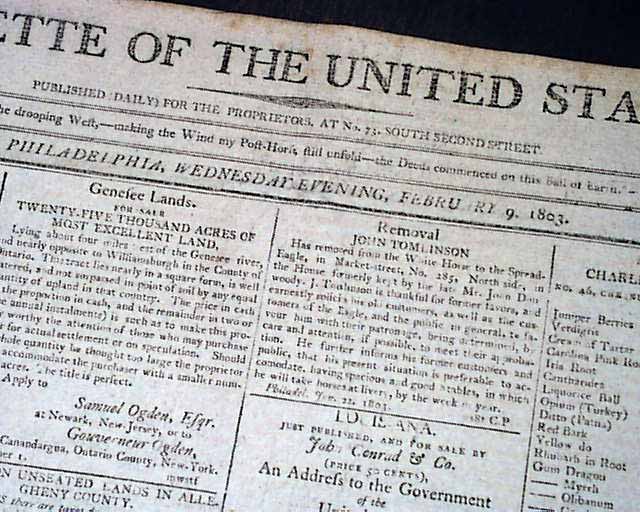
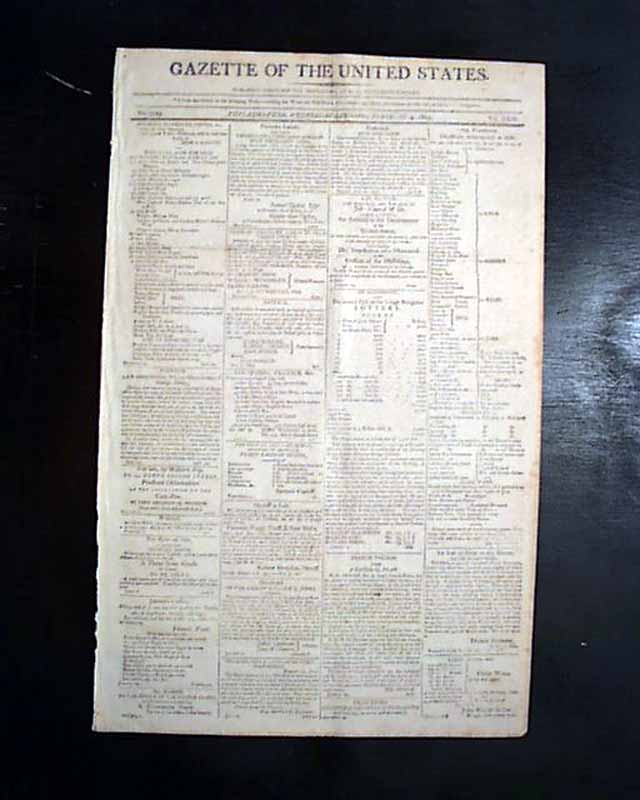
GAZETTE OF THE UNITED STATES, Philadelphia, Feb. 9, 1803
* Very early Dickinson College
* Found by Benjamin Rush
* Advertisement for admission
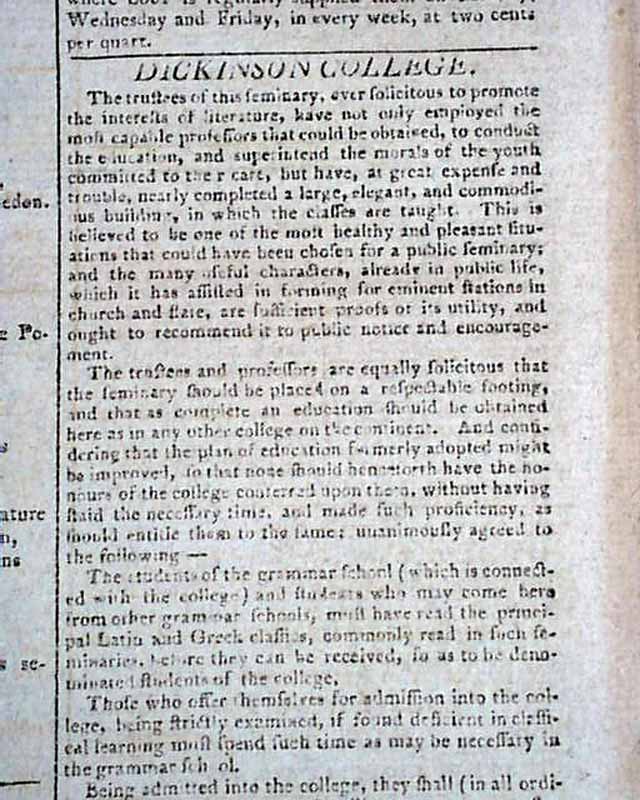
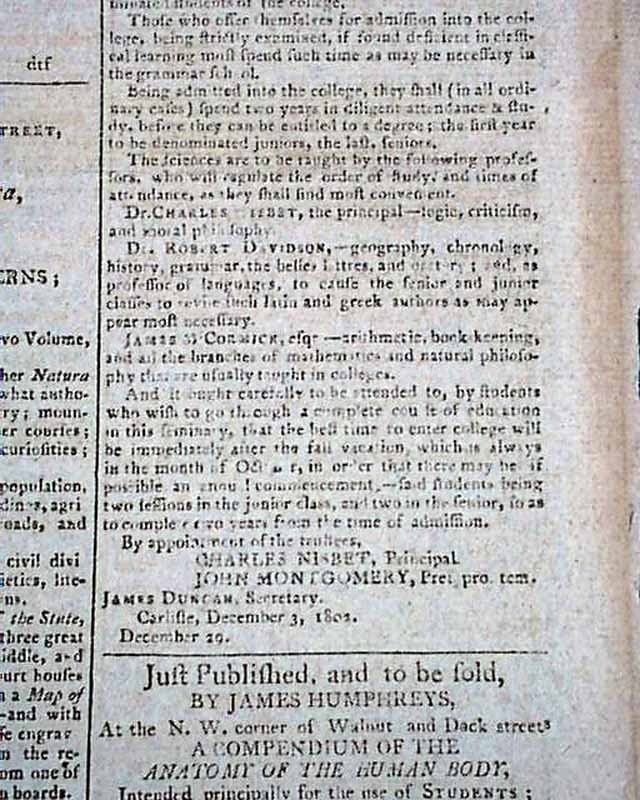
The back page has a terrific & quite detailed notice headed: "DICKINSON COLLEGE" which details the stringent requirements of the students, and that: "...trustees & professors are equally solicitous that the seminary should be placed on a respectable footing & that as complete an education should be obtained here as in any other college on the continent..." and noting: "...those who offer themselves for admission...if found deficient in classical learning must spend such time as may be necessary in the grammar school..." with more, (see).
Dickinson College, Carlisle, Pennsylvania, was chartered on September 9, 1783, six days after the signing of the Treaty of Paris that ended the American Revolution causing it to be the first college to be founded in the newly independent nation. It was also the western-most college in the nation at the time.
Four pages, nice condition.
Background: The 1803 Gazette notice highlights a foundational tension in the early American Republic: the struggle to define a distinctly American system of higher education that balanced democratic utility with classical European prestige. Founded in 1783 as the first college chartered in the newly independent United States, Dickinson College was intended by founder Benjamin Rush to break away from traditional aristocratic curriculums in favor of practical sciences and modern subjects suited for a rising democracy. However, the strict classical entrance requirements and threats of remedial grammar school detailed in this 1803 notice reveal that the institution was forced to compromise its progressive ideals to maintain institutional legitimacy and compete for elite students against entrenched giants like Harvard and Princeton. This document captures the exact moment the nation's westernmost college had to pivot, illustrating how early American educators had to anchor themselves in traditional European scholarship while simultaneously trying to forge an educated citizenry capable of leading a fragile new republic.
* Very early Dickinson College
* Found by Benjamin Rush
* Advertisement for admission
The back page has a terrific & quite detailed notice headed: "DICKINSON COLLEGE" which details the stringent requirements of the students, and that: "...trustees & professors are equally solicitous that the seminary should be placed on a respectable footing & that as complete an education should be obtained here as in any other college on the continent..." and noting: "...those who offer themselves for admission...if found deficient in classical learning must spend such time as may be necessary in the grammar school..." with more, (see).
Dickinson College, Carlisle, Pennsylvania, was chartered on September 9, 1783, six days after the signing of the Treaty of Paris that ended the American Revolution causing it to be the first college to be founded in the newly independent nation. It was also the western-most college in the nation at the time.
Four pages, nice condition.
Background: The 1803 Gazette notice highlights a foundational tension in the early American Republic: the struggle to define a distinctly American system of higher education that balanced democratic utility with classical European prestige. Founded in 1783 as the first college chartered in the newly independent United States, Dickinson College was intended by founder Benjamin Rush to break away from traditional aristocratic curriculums in favor of practical sciences and modern subjects suited for a rising democracy. However, the strict classical entrance requirements and threats of remedial grammar school detailed in this 1803 notice reveal that the institution was forced to compromise its progressive ideals to maintain institutional legitimacy and compete for elite students against entrenched giants like Harvard and Princeton. This document captures the exact moment the nation's westernmost college had to pivot, illustrating how early American educators had to anchor themselves in traditional European scholarship while simultaneously trying to forge an educated citizenry capable of leading a fragile new republic.
Category: Pre-Civil War
No Longer Available
100% Authentic: Original printing, never a reproduction.
Other issues you may like
§ related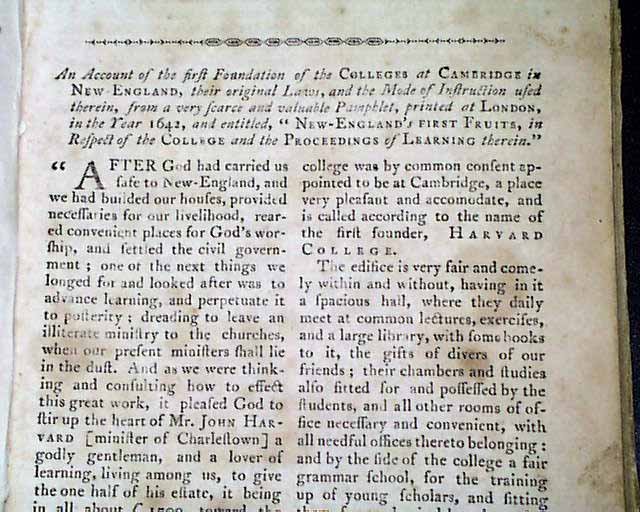
North Carolina to debate the Constitution...
THE COLUMBIAN MAGAZINE, Philadelphia, December, 1788 The issue begins with 5 pages on: "An Account of the first Foundation of the College at Cambridge in...
$47
Washington College in 1826....
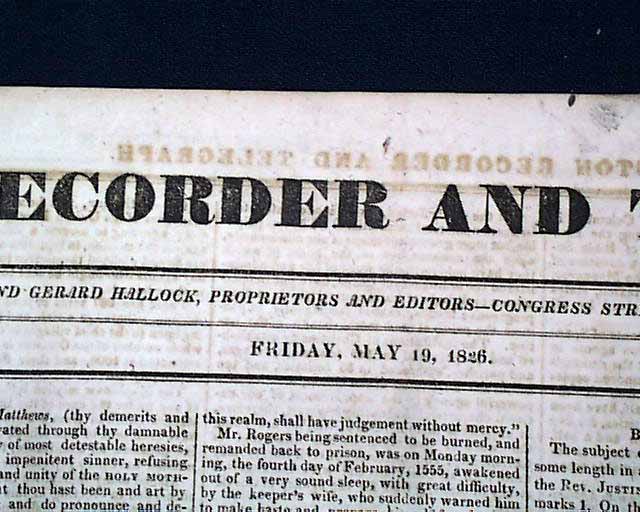
BOSTON RECORDER AND TELEGRAPH, May 19, 1826 A back page report under Washington College says this college at Hartford, Conn. "...though in its infancy,
...
May 1826
$30
One of the great rarities in American magazines...
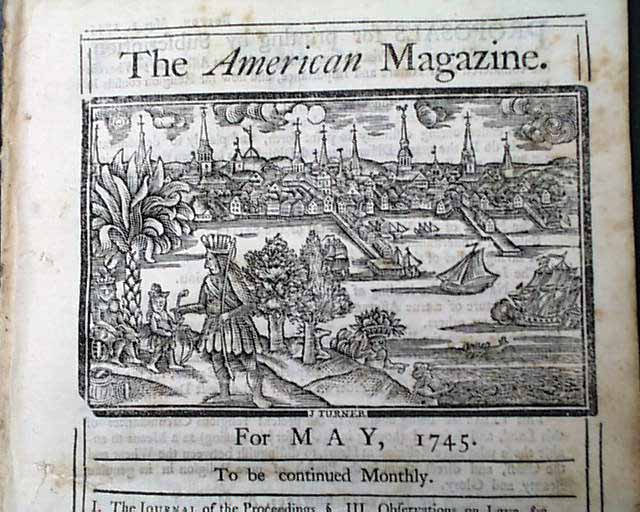
THE AMERICAN MAGAZINE, Boston, May, 1745
* Very rare & early colonial magazine
* Great Boston masthead engraving
This is a very rare title,...
* Very rare & early colonial magazine
* Great Boston masthead engraving
This is a very rare title,...
May 1745
$4,895
Georgetown to be the nation's capital?
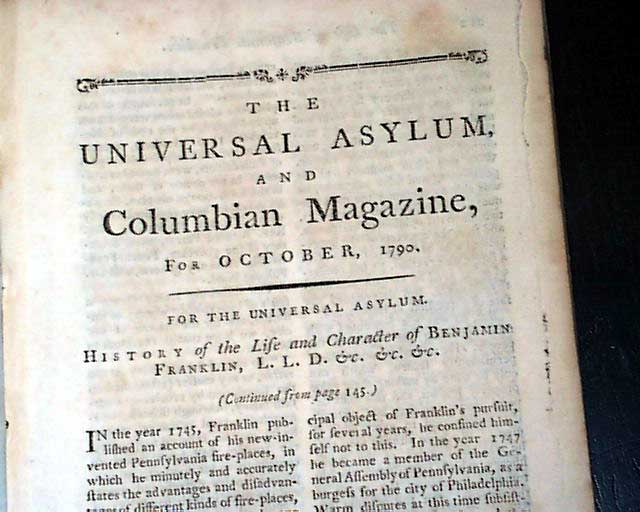
THE UNIVERSAL ASYLUM & COLUMBIAN MAGAZINE, Philadelphia, October, 1790 The issue begins with the continued: "History of the Life & Character of Benjamin...
$86