Home >
Reports on the French & Indian War...
Reports on the French & Indian War...
Item # 693718
Currently Unavailable. Contact us if you would like to be placed on a want list or to be notified if a similar item is available.
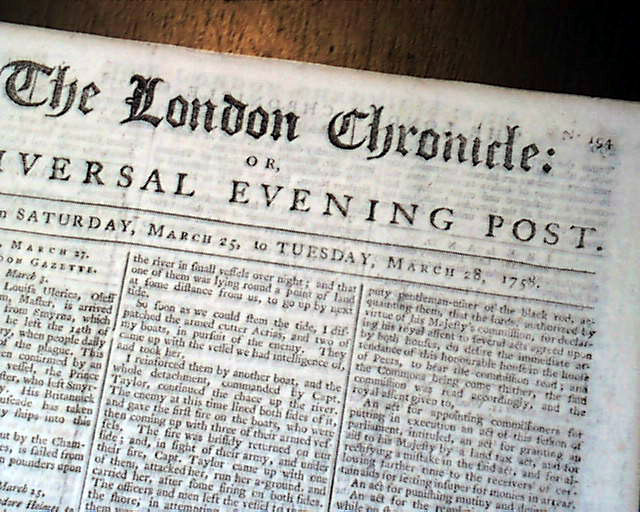
March 28, 1758
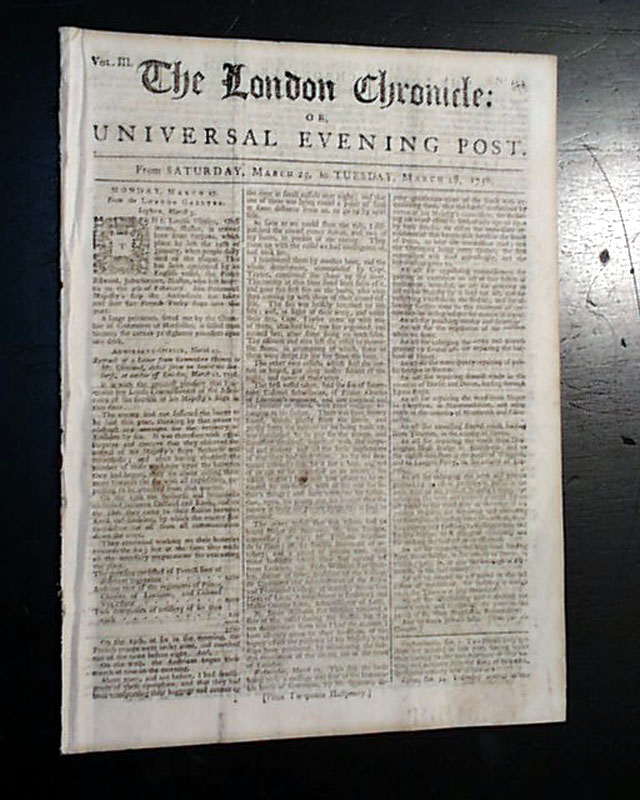
THE LONDON CHRONICLE, England, March 28, 1758
* French and Indian War
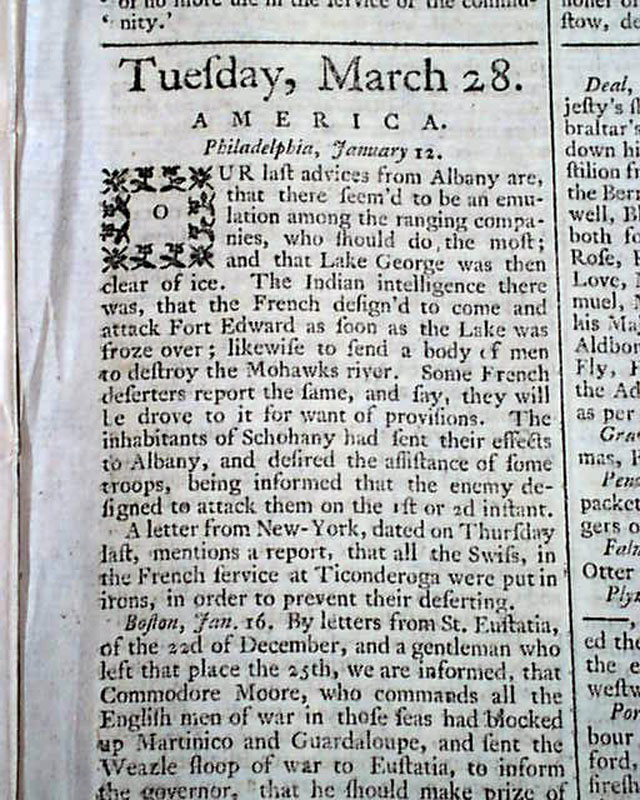
Page 7 has most of a column headed: "America" with a Philadelphia dateline but with news reports from around Albany including: "Indian intelligence there was that the French design'd to come & attack Fort Edward...send a body of men to destroy the Mohawks river. Some French deserters report the same...the French service at Ticonderoga were put in irons in order to prevent their deserting."
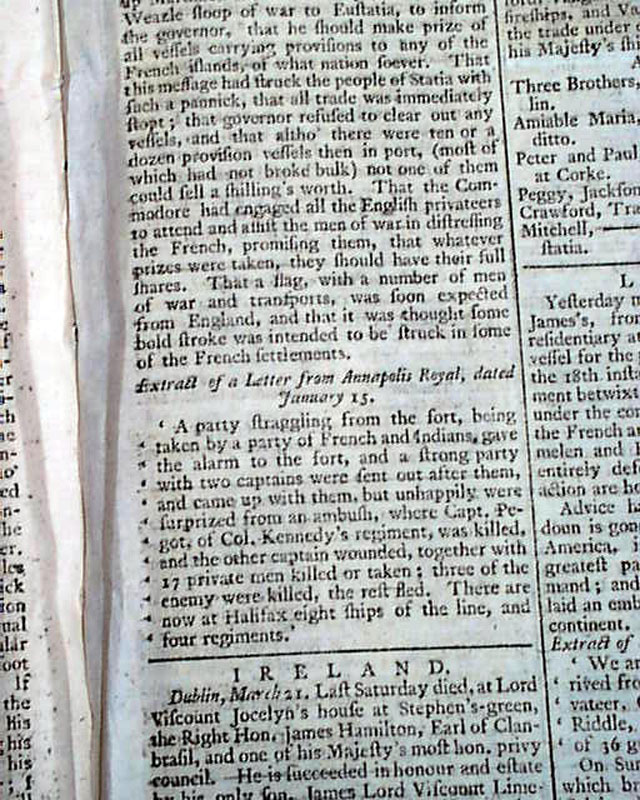
Also items datelined Boston, and a letter from Annapolis, the latter including: "A party straggling from the fort, being taken by a party of French and Indians, gave the alarm to the fort & a strong party with two captains are sent out after them..." with more on this skirmish.
Eight pages, 8 1/4 by 11 inches, very nice condition.
AI notes: The 1758 Fort Edward attack was part of the larger French strategy to disrupt British operations during the French and Indian War, though the fort itself was not directly captured. Fort Edward, located on the western shore of the Hudson River in New York, was a crucial British outpost used to support their northern campaigns, especially against the French strongholds at Fort Ticonderoga and Fort William Henry. In the summer of 1758, French forces, commanded by General Louis-Joseph de Montcalm, launched a series of raids in the region, often supported by Native American allies like the Algonquin and Iroquois tribes. These forces aimed to undermine British control by targeting frontier posts and disrupting supply lines. While the French did not succeed in overtaking the fort, they conducted frequent skirmishes and intimidation tactics, including surprise ambushes and smaller raids on nearby settlements. The fort remained a key British position, but the attacks highlighted the vulnerability of British supply lines and forces in the region. Ultimately, the episode was part of a larger pattern of French harassment designed to draw British attention away from their main strategic objectives, contributing to the broader uncertainty and pressure on British forces during the early years of the war.
Category: The 1600's and 1700's
No Longer Available