

Two issue set on Botany Bay... Convict George Basrrington...
Item # 600126Sorry, but this item is no longer available. Please be in touch at info@rarenewspapers.com if you would like to be placed on a want list or are interested in a potential alternate issue.
March 10, 1791
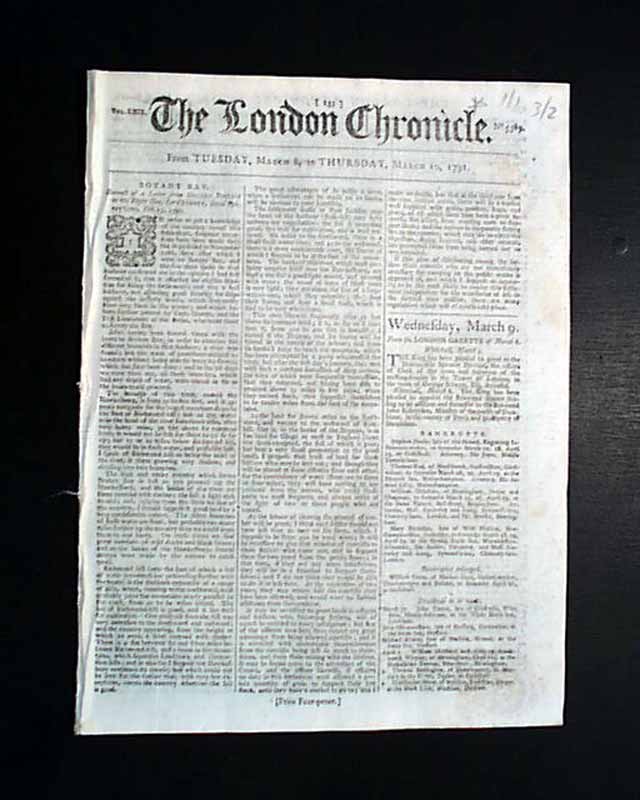
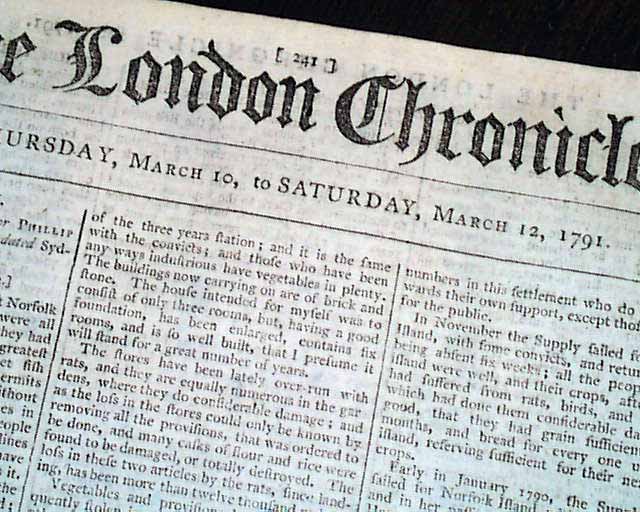
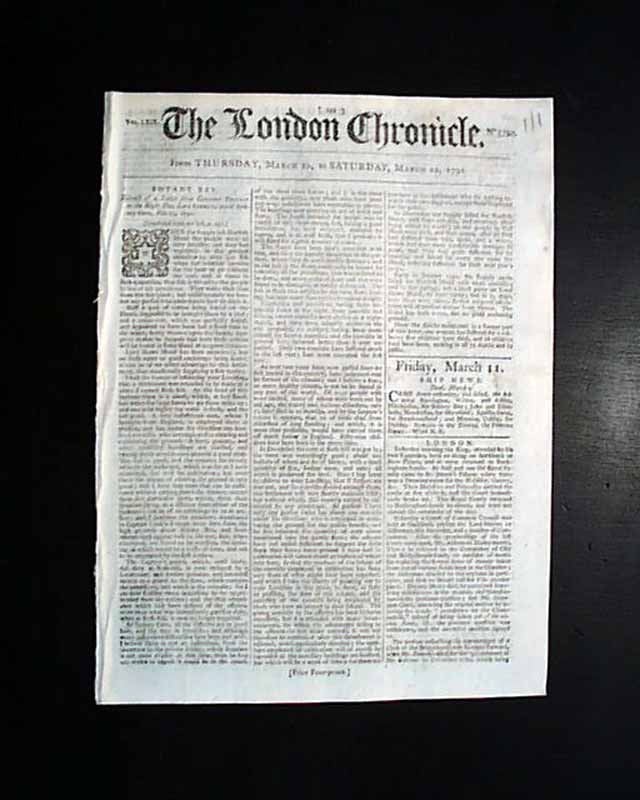
(2 issues) THE LONDON CHRONICLE, England, March 10 and March 12, 1791 This is a two issue set, each containing on the front page a letter as noted, the March 12 issue having the conclusion.
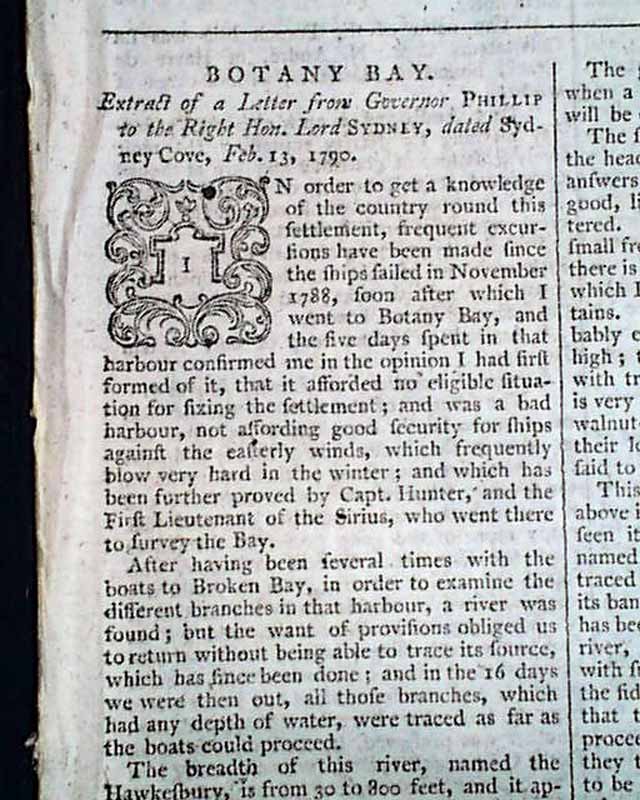
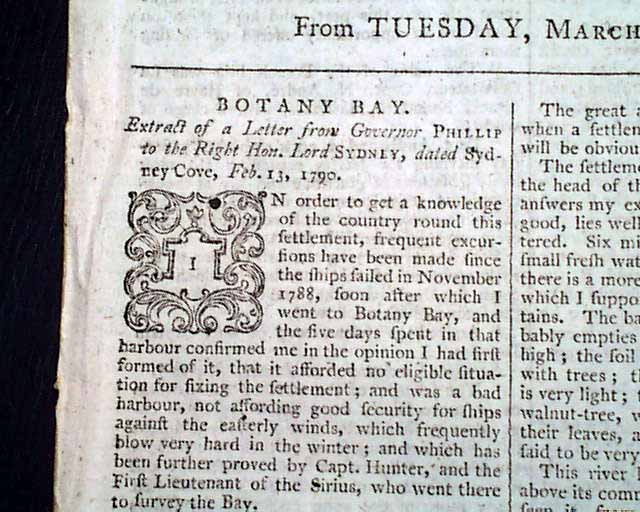
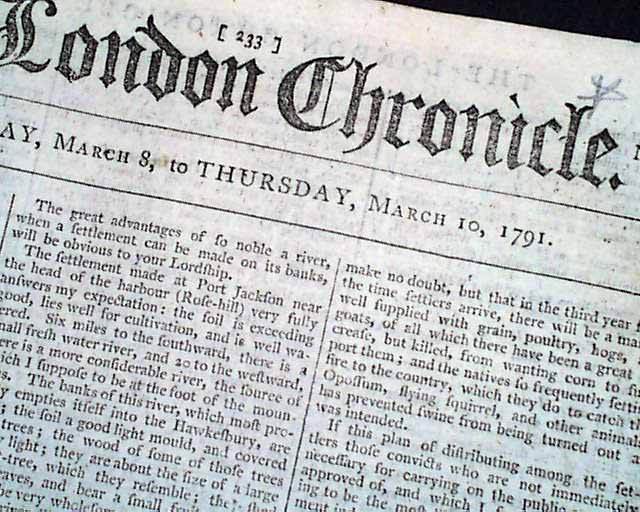
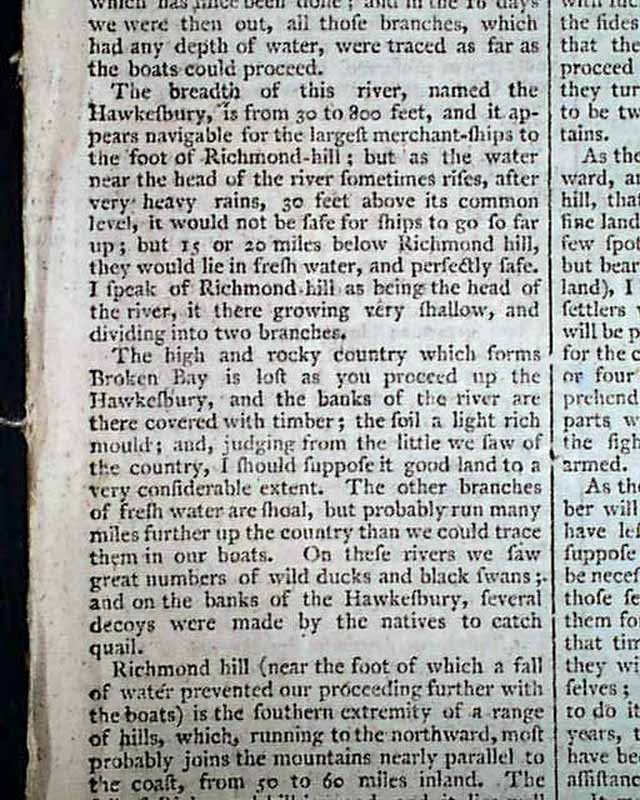
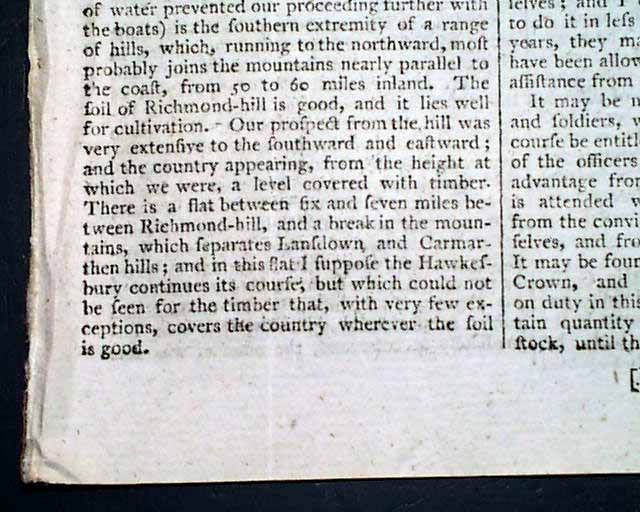
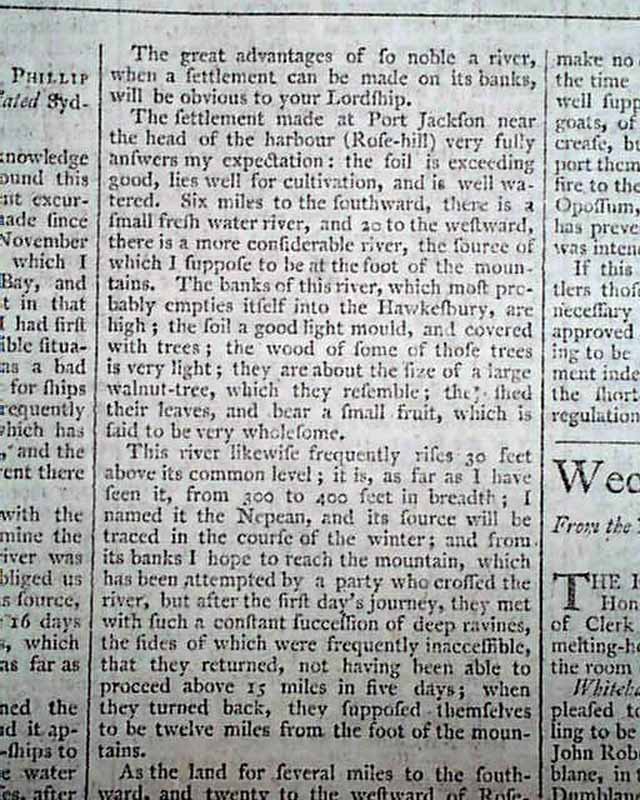
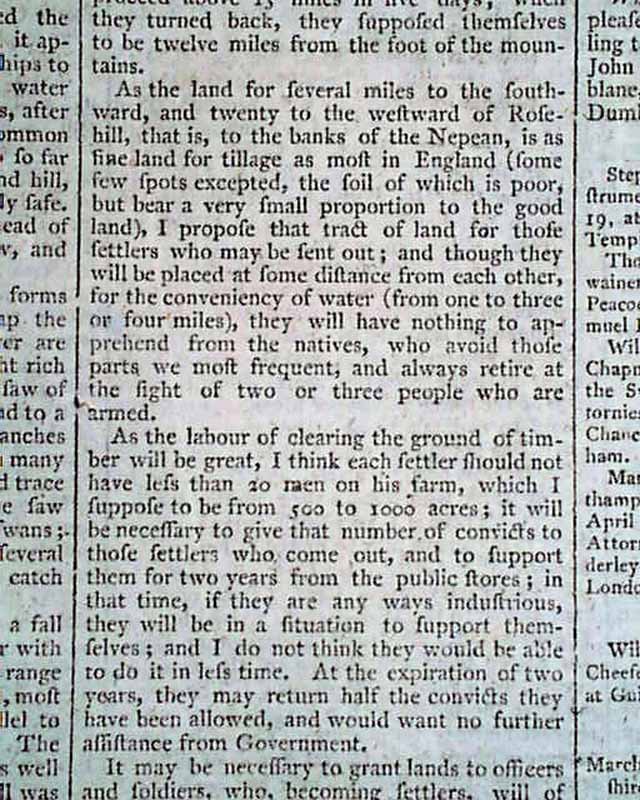
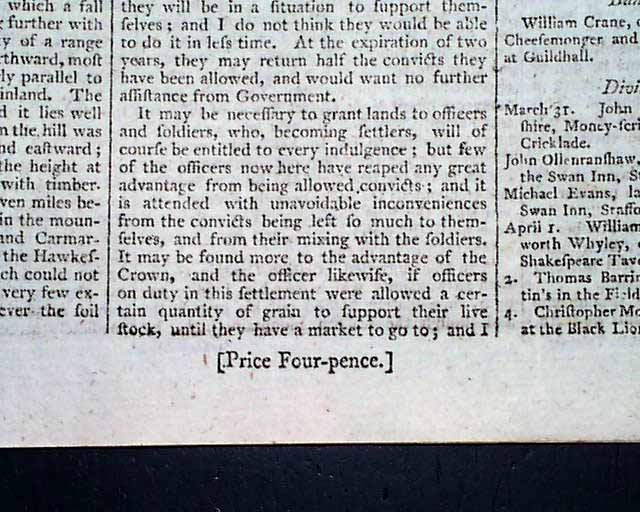
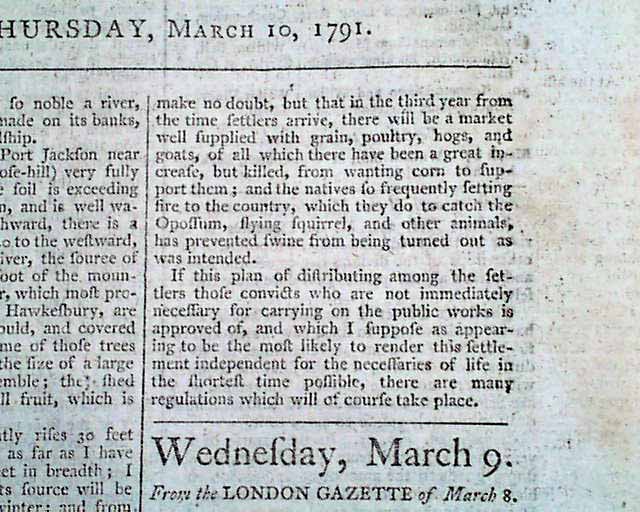
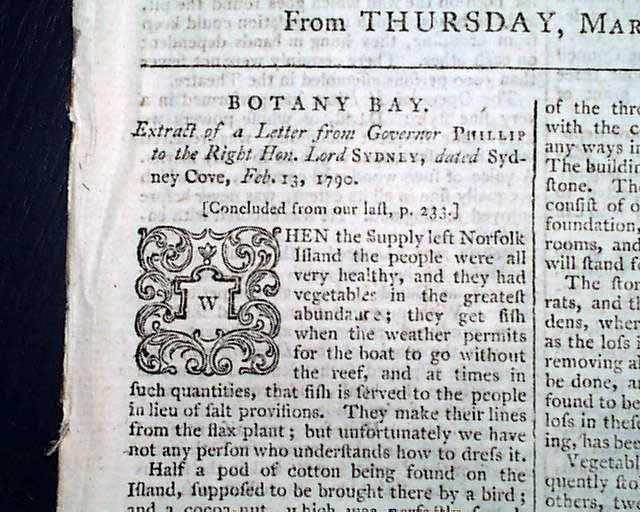
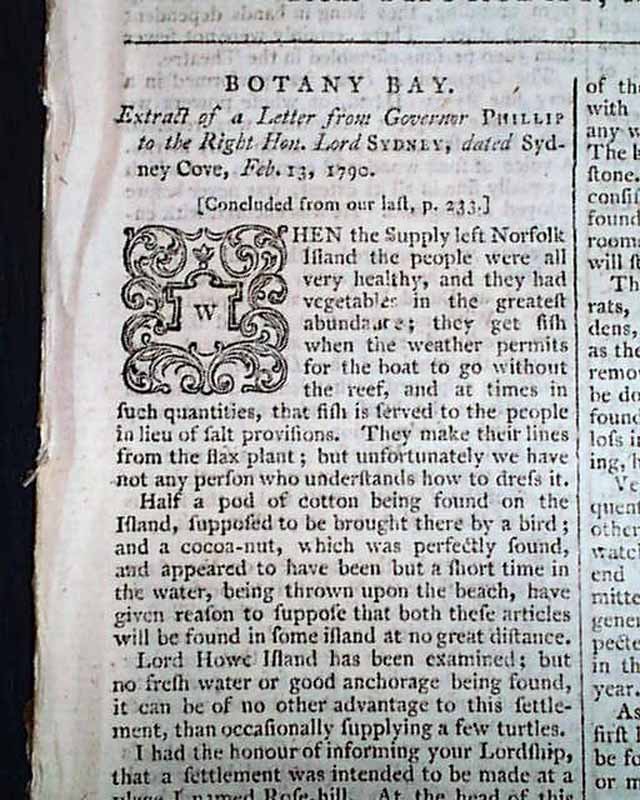
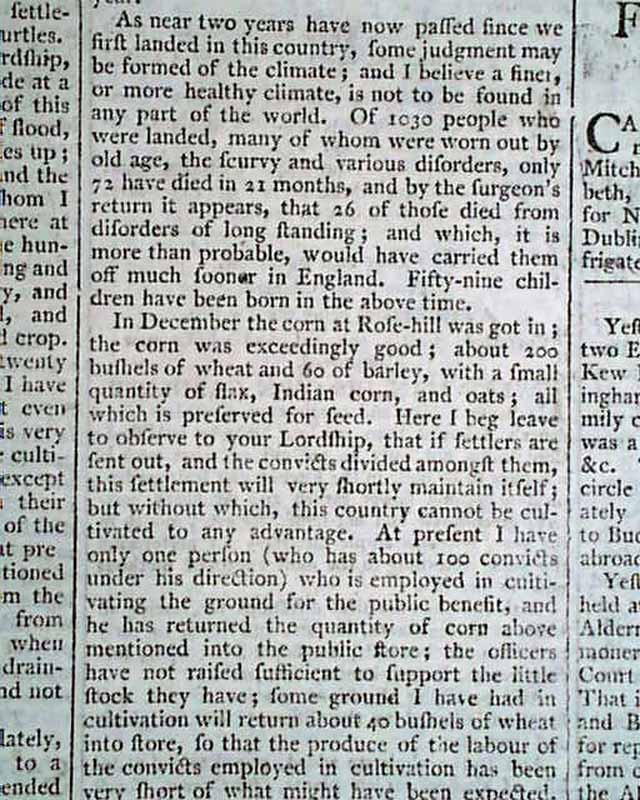
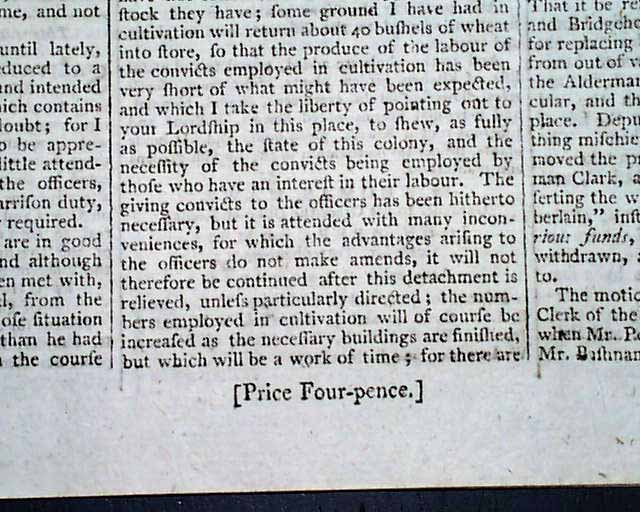
March 10 issue: Most of the front page is taken up with: "Botany Bay" "Extract of a Letter from Governor Phillip to the Right Hon. Lord Sydney, dated Sydney Cove, Feb. 13, 1790" which has since been published in a book. the letter beings: "In order to get a knowledge of the country round this settlement, frequent excursions have been made since these ships sailed in November, 1788, soon after which I went to Botany Bay..." and what follows is some very descriptive text of the geography of the area. One portion notes: "...The settlement made at Port Jackson near the head of the harbour (Rose Hill) very fully answers my expectation: the soil is exceedingly good, lies well for cultivation, & is well watered..." with much more, and also some nice content on creating settlements there (see).
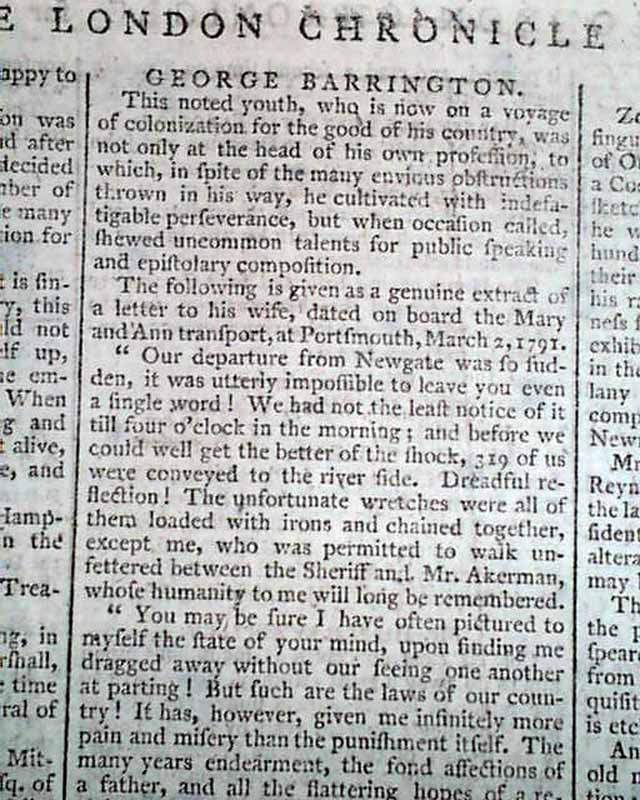
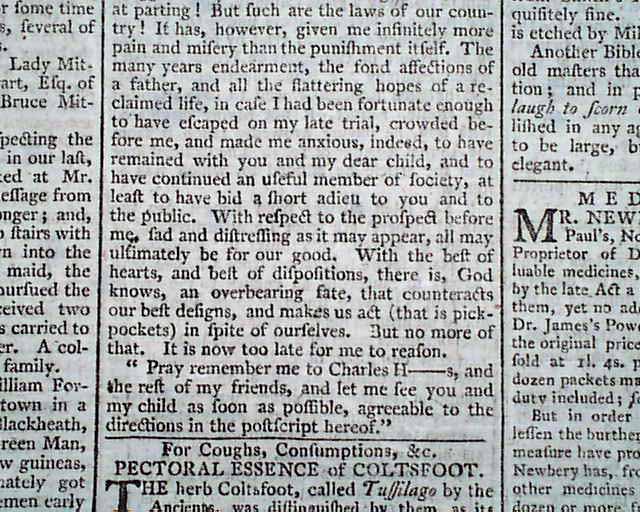
Page 3 has a curious report headed: "George Barrington", a Botany Bay convict who was given special privileges and ended up being in charge of other convicts (see the images and the background note below).
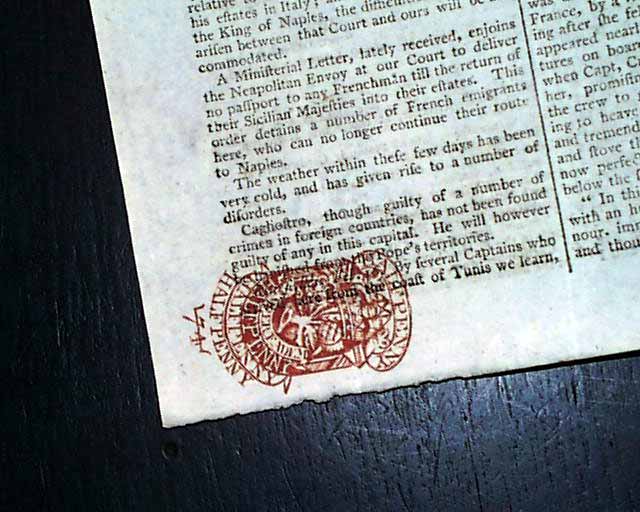
Eight pages with a full tax stamp on page two. Very nice condition.
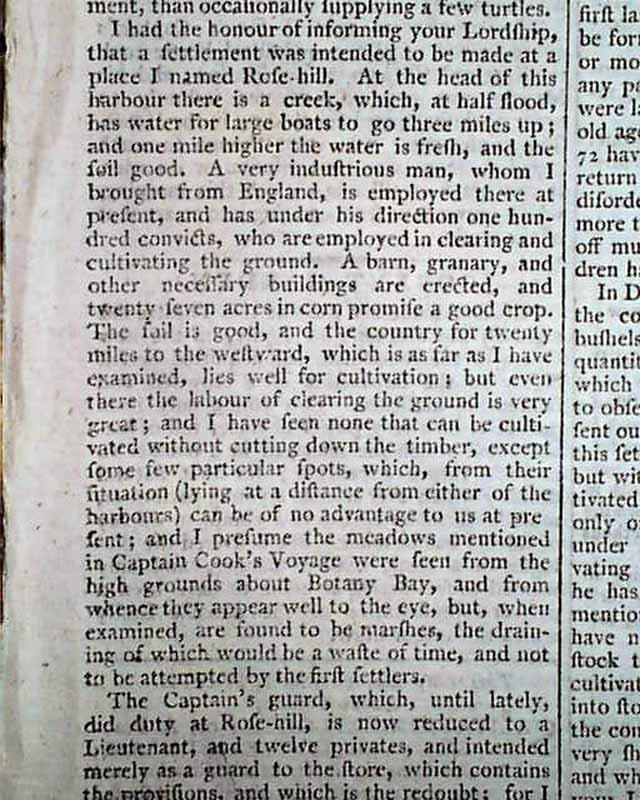
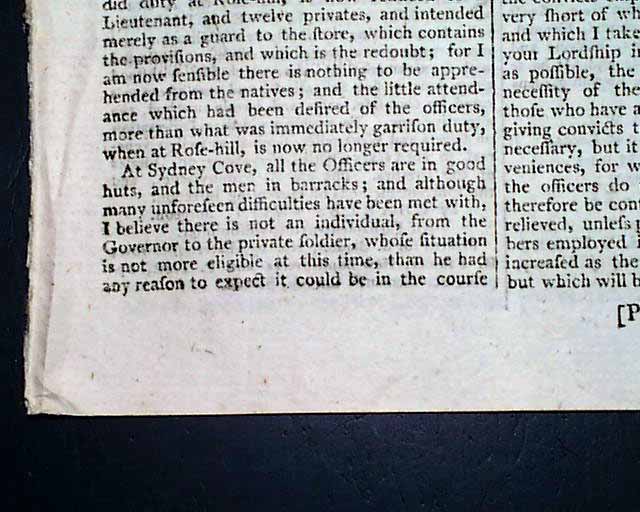
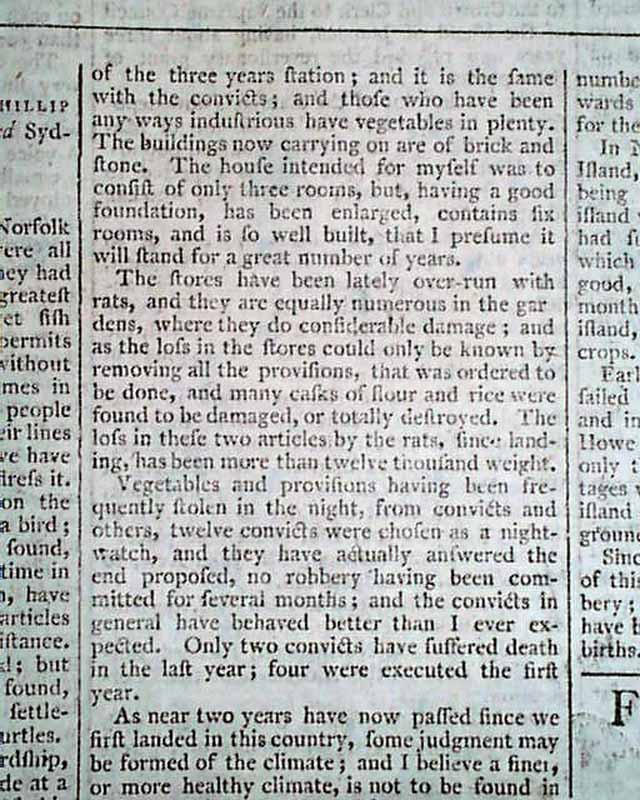
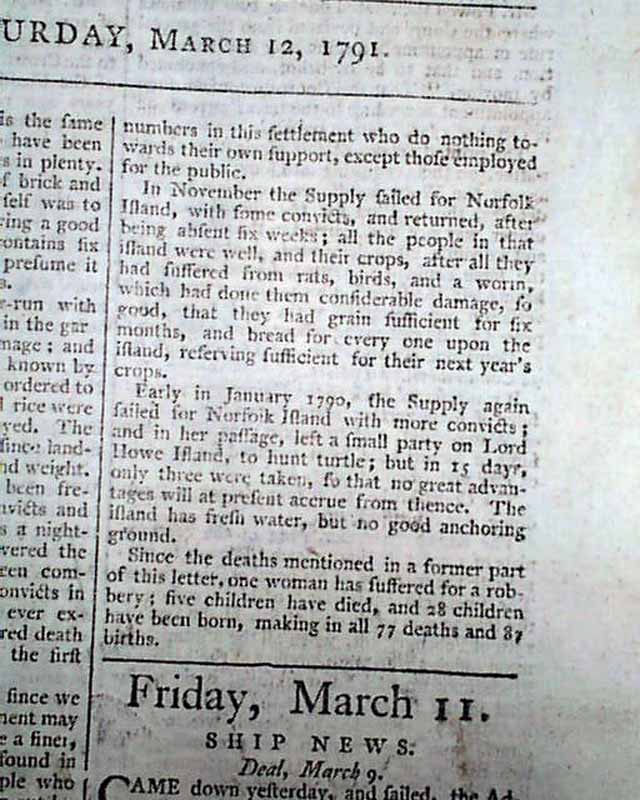
March 12 issue: Most of the front page is taken up with a continuation of the same letter noted in the March 10 issue. The report mentions in part the supplies arriving at Norfolk Island, and also that: "...a settlement was intended to be made at a place I named Rose Hill...A very industrious man...is employed there at present & has under his direction 100 convicts who are employed in clearing & cultivating the ground..." & further on: "...At Sydney Cove all the officers are in good huts & the men in barracks...' with much more detail (see).
Eight pages with a full tax stamp on page four. Very nice condition.
Background (source - Wikipedia): George Barrington (14 May 1755 – 27 December 1804), an Irish-born pickpocket, popular London socialite, Australian pioneer (following his transportation to Botany Bay), and author. His escapades, arrests, and trials, were widely chronicled in the London press of his day. For over a century following his death, and still perhaps today, he was most celebrated for the line "We left our country for our country's good." The attribution of the line to Barrington is considered apocryphal since the 1911 discovery by Sydney book collector Alfred Lee of the 1802 book in which the line first appeared.
At Botany Bay - One account states that on the voyage out to Botany Bay a conspiracy was hatched by the convicts on board to seize the ship. Barrington disclosed the plot to the captain, and the latter, on reaching New South Wales, reported him favourably to the authorities, with the result that in 1792 Barrington obtained a warrant of emancipation (the first issued), becoming subsequently superintendent of convicts and later high constable of Parramatta.
March 10 issue: Most of the front page is taken up with: "Botany Bay" "Extract of a Letter from Governor Phillip to the Right Hon. Lord Sydney, dated Sydney Cove, Feb. 13, 1790" which has since been published in a book. the letter beings: "In order to get a knowledge of the country round this settlement, frequent excursions have been made since these ships sailed in November, 1788, soon after which I went to Botany Bay..." and what follows is some very descriptive text of the geography of the area. One portion notes: "...The settlement made at Port Jackson near the head of the harbour (Rose Hill) very fully answers my expectation: the soil is exceedingly good, lies well for cultivation, & is well watered..." with much more, and also some nice content on creating settlements there (see).
Page 3 has a curious report headed: "George Barrington", a Botany Bay convict who was given special privileges and ended up being in charge of other convicts (see the images and the background note below).
Eight pages with a full tax stamp on page two. Very nice condition.
March 12 issue: Most of the front page is taken up with a continuation of the same letter noted in the March 10 issue. The report mentions in part the supplies arriving at Norfolk Island, and also that: "...a settlement was intended to be made at a place I named Rose Hill...A very industrious man...is employed there at present & has under his direction 100 convicts who are employed in clearing & cultivating the ground..." & further on: "...At Sydney Cove all the officers are in good huts & the men in barracks...' with much more detail (see).
Eight pages with a full tax stamp on page four. Very nice condition.
Background (source - Wikipedia): George Barrington (14 May 1755 – 27 December 1804), an Irish-born pickpocket, popular London socialite, Australian pioneer (following his transportation to Botany Bay), and author. His escapades, arrests, and trials, were widely chronicled in the London press of his day. For over a century following his death, and still perhaps today, he was most celebrated for the line "We left our country for our country's good." The attribution of the line to Barrington is considered apocryphal since the 1911 discovery by Sydney book collector Alfred Lee of the 1802 book in which the line first appeared.
At Botany Bay - One account states that on the voyage out to Botany Bay a conspiracy was hatched by the convicts on board to seize the ship. Barrington disclosed the plot to the captain, and the latter, on reaching New South Wales, reported him favourably to the authorities, with the result that in 1792 Barrington obtained a warrant of emancipation (the first issued), becoming subsequently superintendent of convicts and later high constable of Parramatta.
Category: The 1600's and 1700's


