

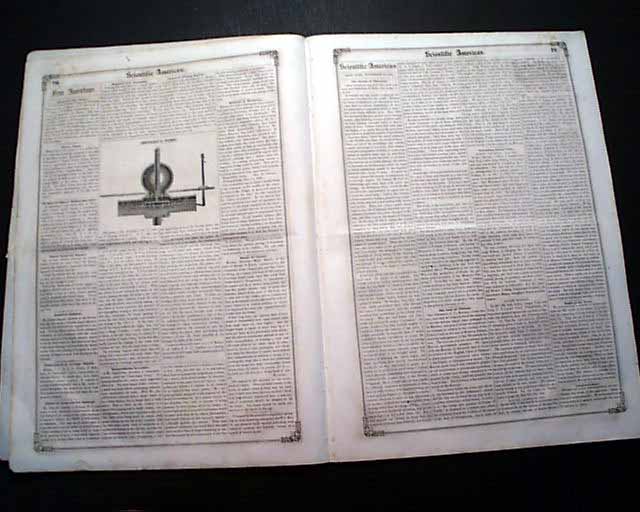
Early & significant development in the sewing machine...
Item # 561509Sorry, but this item is no longer available. Please be in touch at info@rarenewspapers.com if you would like to be placed on a want list or are interested in a potential alternate issue.
November 24, 1849
SCIENTIFIC AMERICAN, New York, November 24, 1849
* Extremely early sewing machine, with front page print
* Alan B. Wilson
This is a very early issue of this famous scientific magazine which still publishes today. It began in 1845, just 4 years previous to the date of this issue.
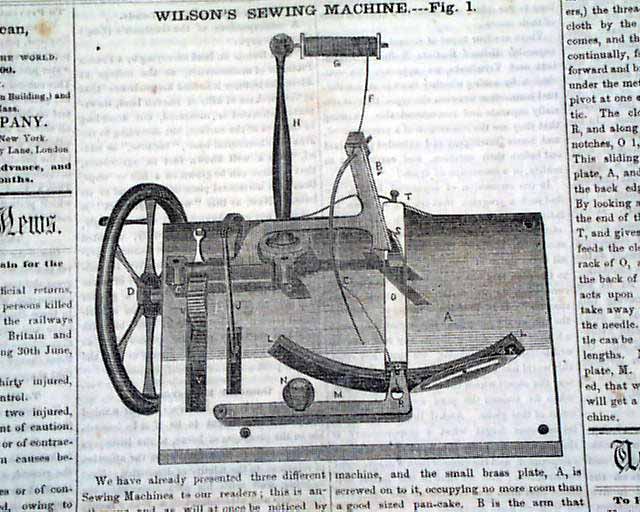
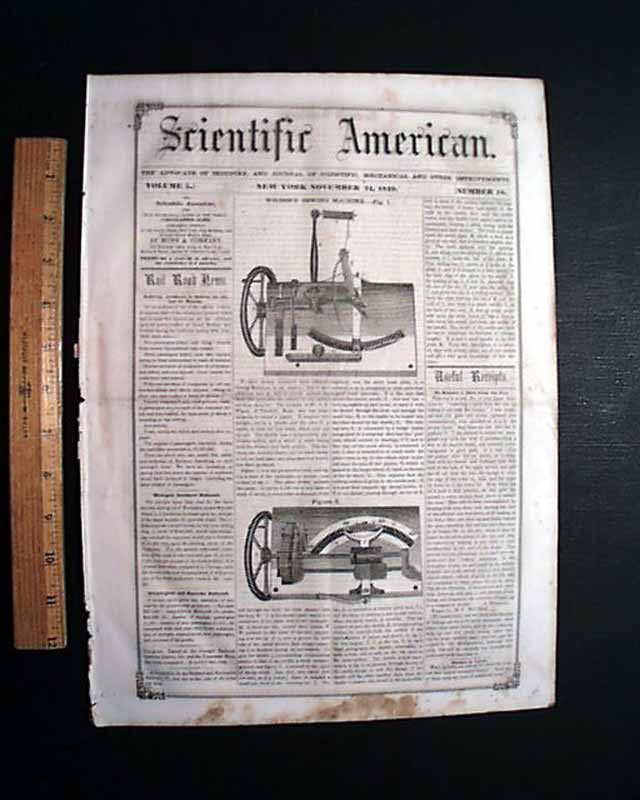
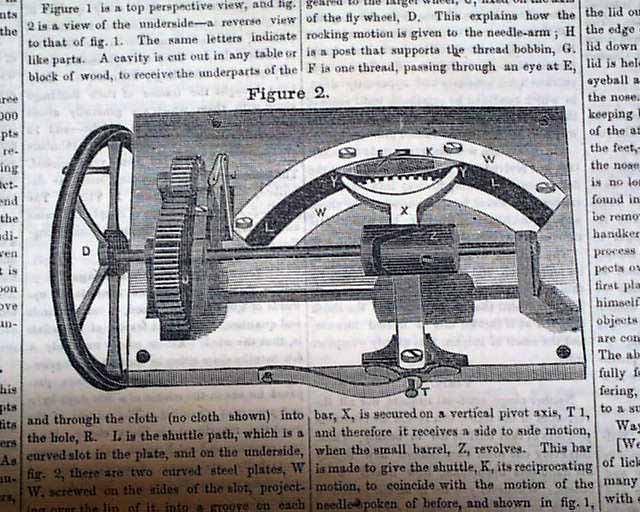
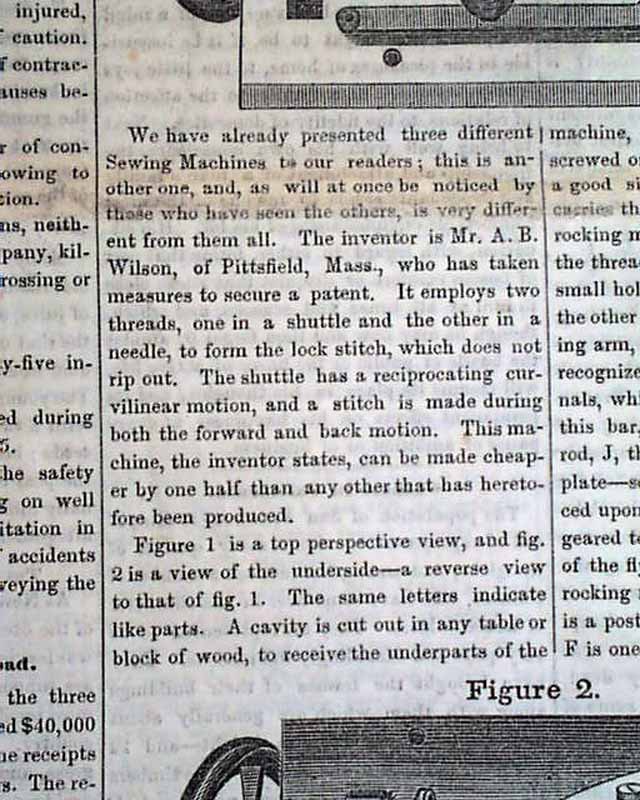
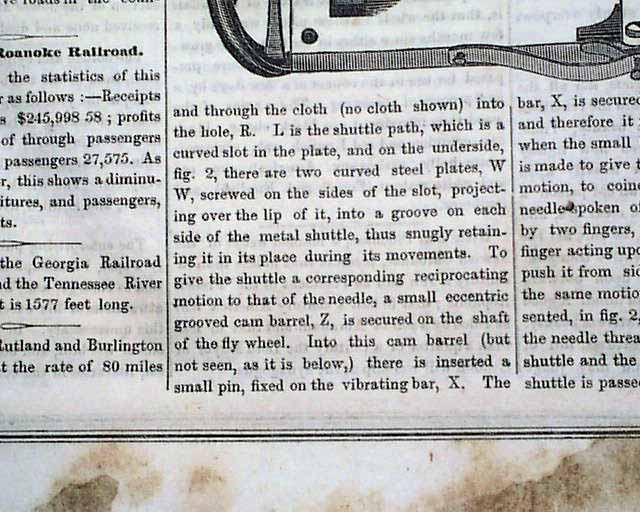
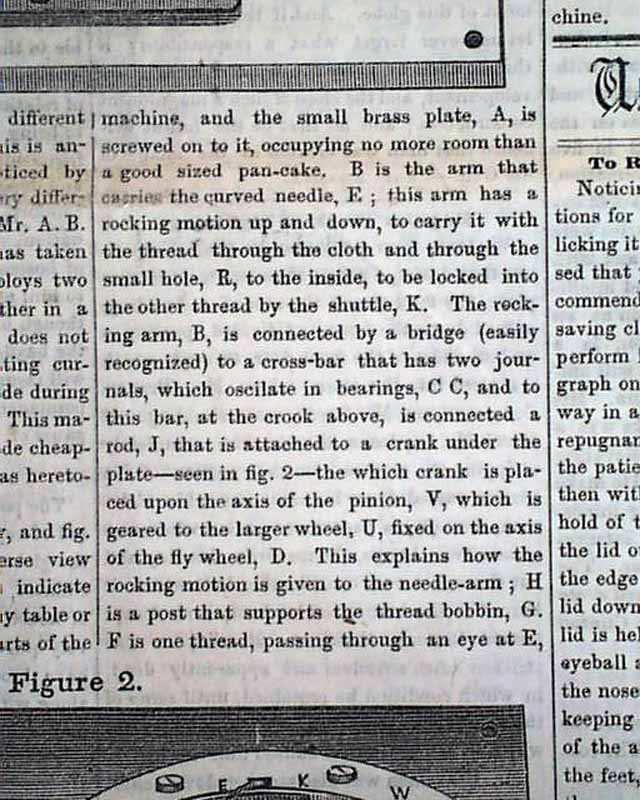
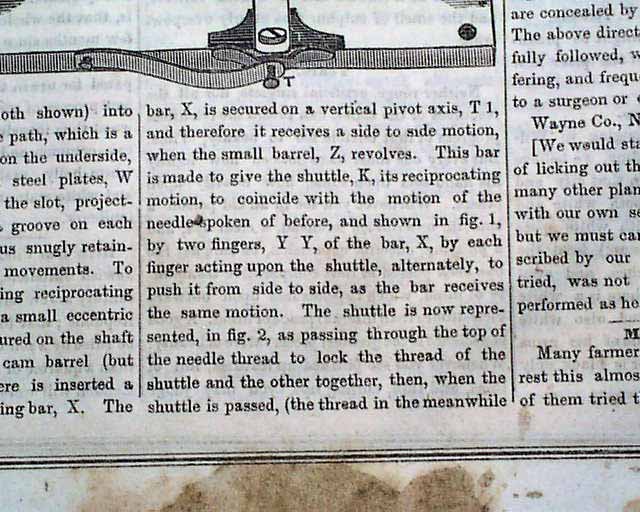
The front page is noteworthy for have not only an article on the "Wilson's Sewing Machine" but two illustrations of it as well. There is a website exclusive to the "Wheeler & Wilson Sewing Machine Co." which includes in part: "One of the most ingenious of the sewing machine inventors was Mr. Allen B. Wilson. He was born in Willett, New York, in 1824. In 1840 at the age of sixteen he worked as an apprentice cabinetmaker for a distant relative.
In 1846 while working as a journeyman cabinetmaker in Michigan, he began the development of a sewing machine, which was independent of the efforts being made by other inventors in New England. In 1849 he devised the rotary hook and bobbin combination, forming the special feature of the Wheeler & Wilson sewing machine. Wilson obtained a patent for his machine in 1850. In 1854, he patented another sewing machine that included the important and effective four-motion feed for moving the work after every stitch. The four motion feed is used on all sewing machines today.
Founded in late 1851, the Wheeler & Wilson Company began the manufacture of sewing machines at Watertown, New York. In 1856, the company was renamed the Wheeler & Wilson Manufacturing Company and moved to Bridgeport, Connecticut where it began full scale manufacturing of sewing machines.
Although Singer sewing machines would eventually become the most popular brand, Wheeler & Wilson machines were the most popular (and most widely copied) machines in the 1850s and 1860s. Only with the advent of the Singer Model 12 New Family machine did the Wheeler & Wilson company begin to lose ground in the late 1860s. "
This issue is complete in 8 pages & measures 11 1/4 by 15 1/2 inches. Some minor browning at the margins, generally in nice condition.
* Extremely early sewing machine, with front page print
* Alan B. Wilson
This is a very early issue of this famous scientific magazine which still publishes today. It began in 1845, just 4 years previous to the date of this issue.
The front page is noteworthy for have not only an article on the "Wilson's Sewing Machine" but two illustrations of it as well. There is a website exclusive to the "Wheeler & Wilson Sewing Machine Co." which includes in part: "One of the most ingenious of the sewing machine inventors was Mr. Allen B. Wilson. He was born in Willett, New York, in 1824. In 1840 at the age of sixteen he worked as an apprentice cabinetmaker for a distant relative.
In 1846 while working as a journeyman cabinetmaker in Michigan, he began the development of a sewing machine, which was independent of the efforts being made by other inventors in New England. In 1849 he devised the rotary hook and bobbin combination, forming the special feature of the Wheeler & Wilson sewing machine. Wilson obtained a patent for his machine in 1850. In 1854, he patented another sewing machine that included the important and effective four-motion feed for moving the work after every stitch. The four motion feed is used on all sewing machines today.
Founded in late 1851, the Wheeler & Wilson Company began the manufacture of sewing machines at Watertown, New York. In 1856, the company was renamed the Wheeler & Wilson Manufacturing Company and moved to Bridgeport, Connecticut where it began full scale manufacturing of sewing machines.
Although Singer sewing machines would eventually become the most popular brand, Wheeler & Wilson machines were the most popular (and most widely copied) machines in the 1850s and 1860s. Only with the advent of the Singer Model 12 New Family machine did the Wheeler & Wilson company begin to lose ground in the late 1860s. "
This issue is complete in 8 pages & measures 11 1/4 by 15 1/2 inches. Some minor browning at the margins, generally in nice condition.
Category: Pre-Civil War


