

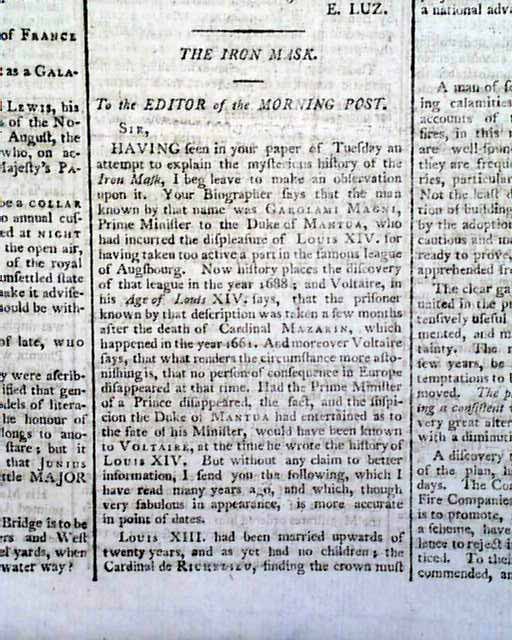
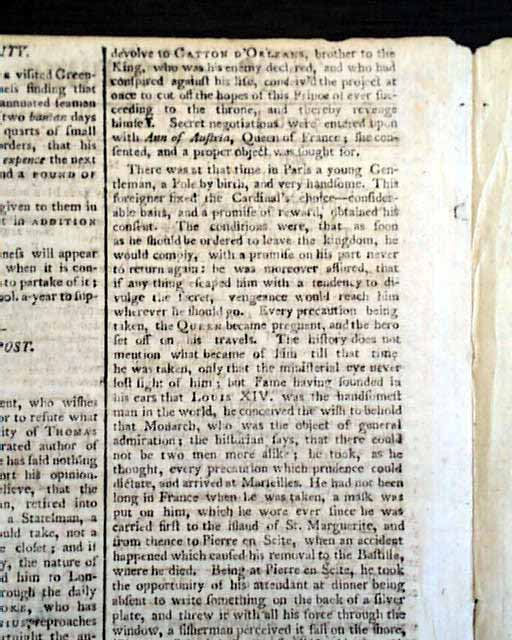
The Man with the Iron Mask...
Item # 544642Sorry, but this item is no longer available. Please be in touch at info@rarenewspapers.com if you would like to be placed on a want list or are interested in a potential alternate issue.
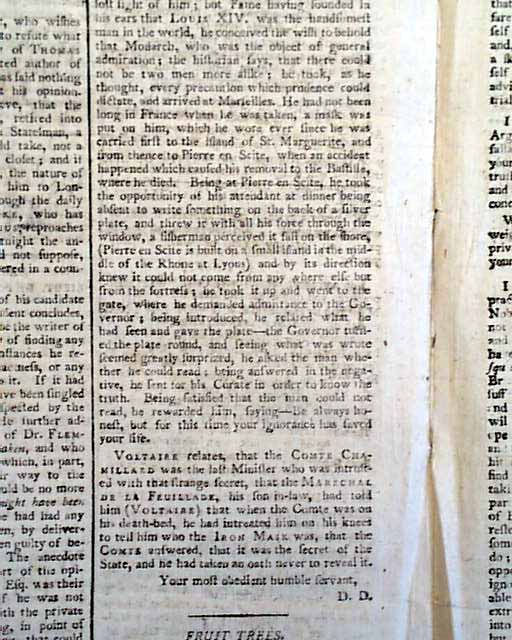
* Man with the Iron Mask
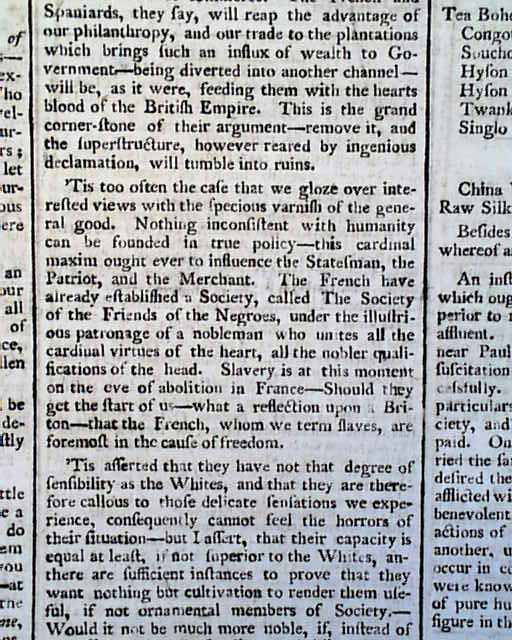
* Article on Slavery
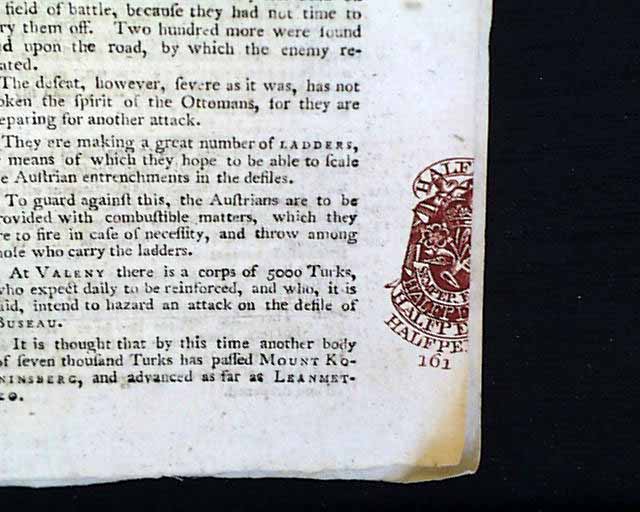
* Red Ink Tax Stamp
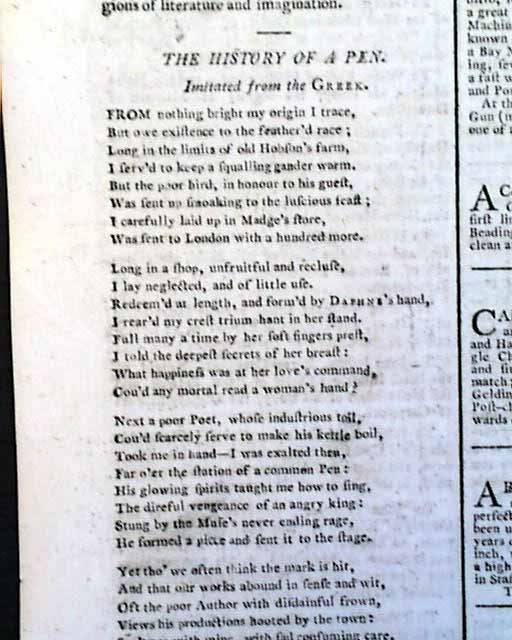
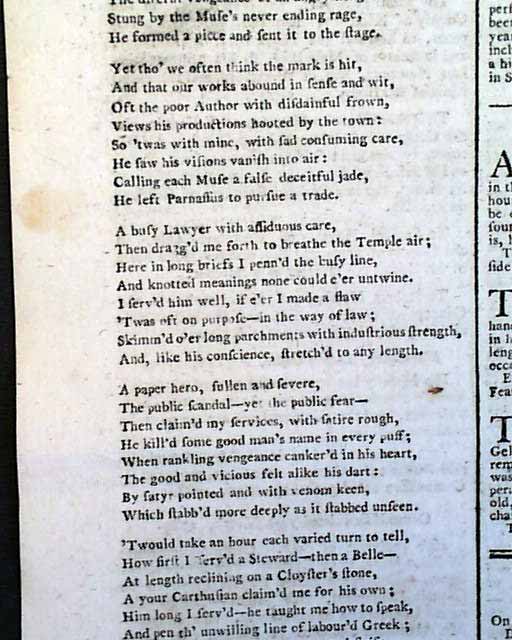
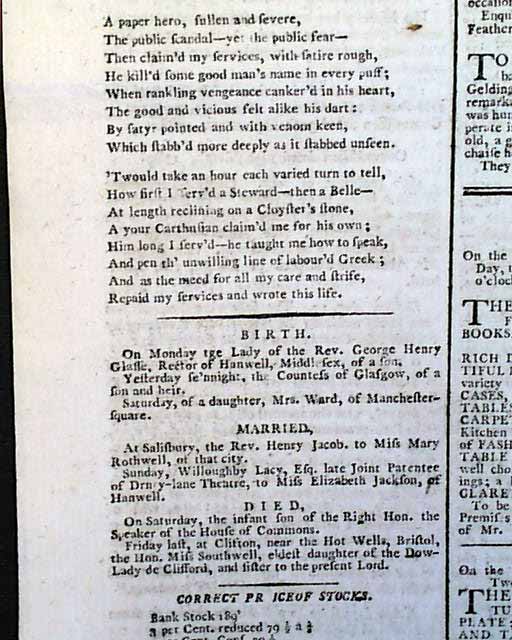
* Poem - History of the Pen
* Uncommon Title
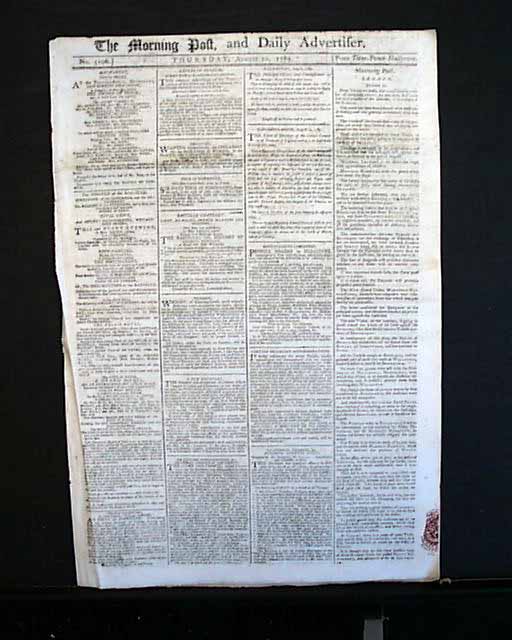
On page 2 of this issue is an article entitled "The Iron Mask" which is 3/4 of a column in length. Page 3 features an article on Slave Trade which is nearly a column in length and the back page features a poem entitled "The History of a Pen".
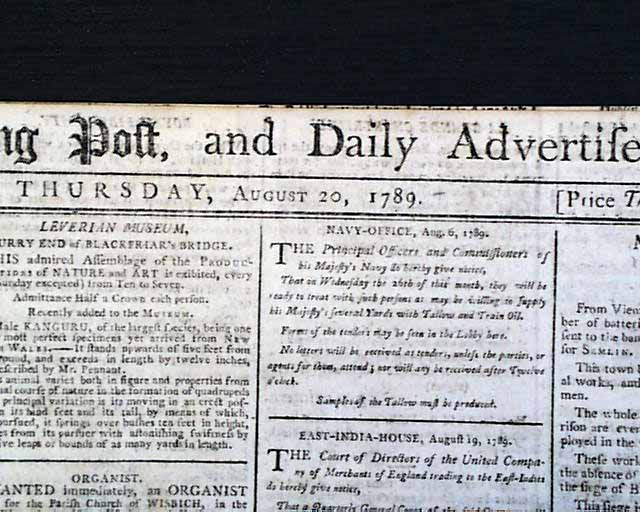
This is a complete 4 page issue which is close-trimmed at the top and may effect a few letters in title headings on the inside and back pages, otherwise is in nice condition. It also contain contains a partial red ink tax stamp at the lower right corner of the front page.
Background Information: The Man in the Iron Mask (French: L'Homme au Masque de Fer) (died November 1703) was a prisoner who was held in a number of jails, including the Bastille and the Chateau d’lf, during the reign of Louis XIV of
Category: The 1600's and 1700's


