

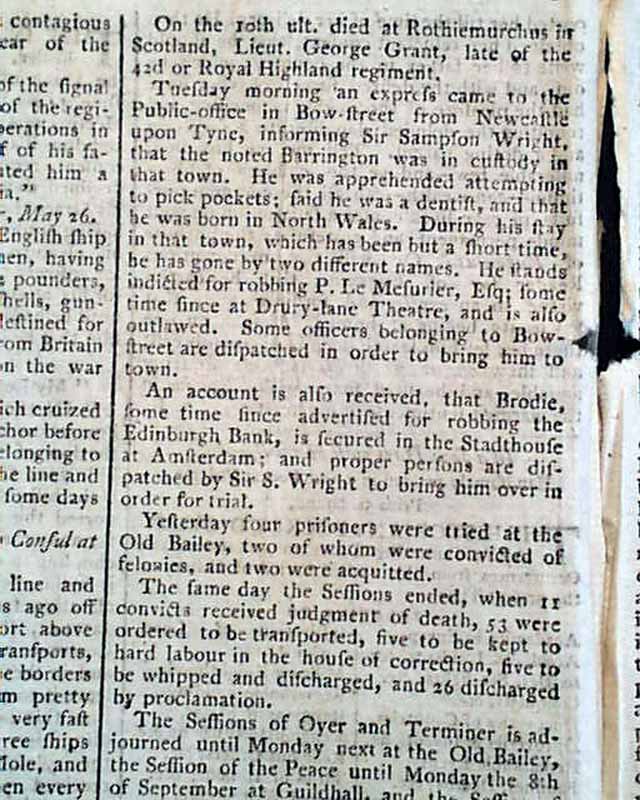
George Barringington... arrested for pickpocketing...
Item # 600177Sorry, but this item is no longer available. Please be in touch at info@rarenewspapers.com if you would like to be placed on a want list or are interested in a potential alternate issue.
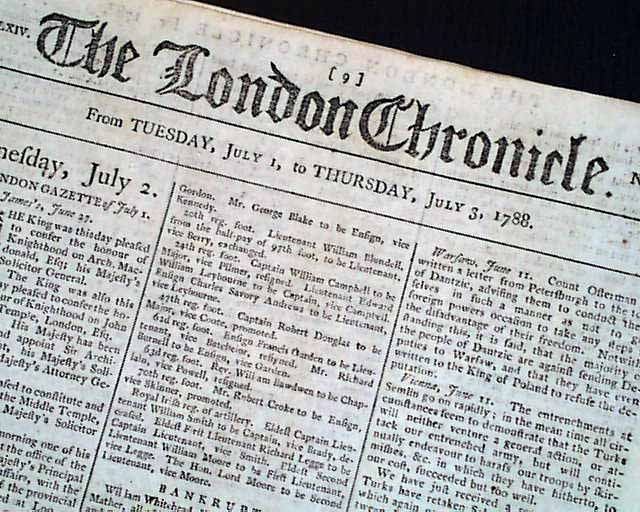
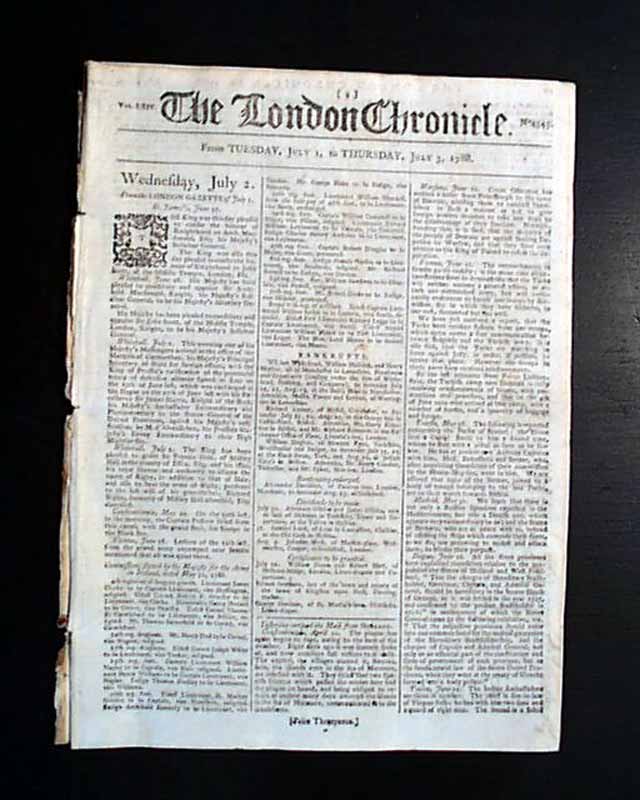
July 03, 1788
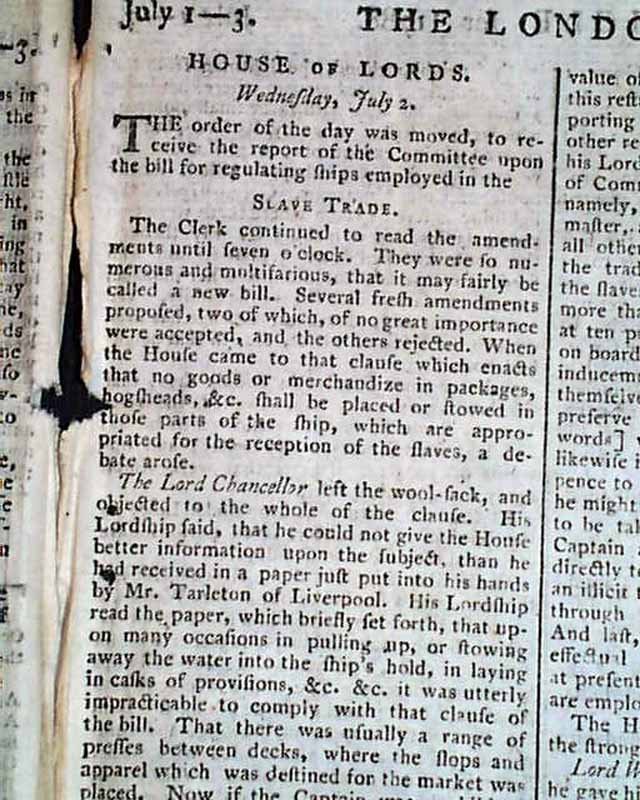
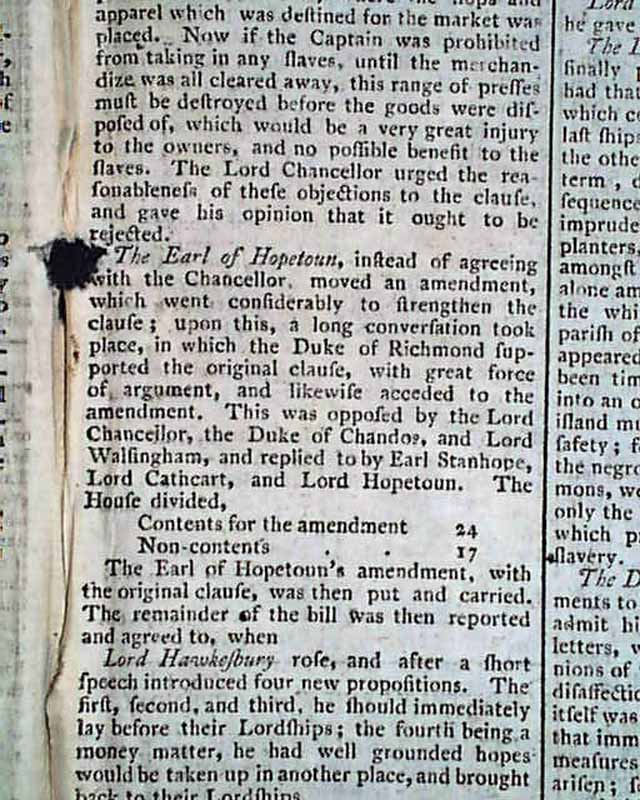
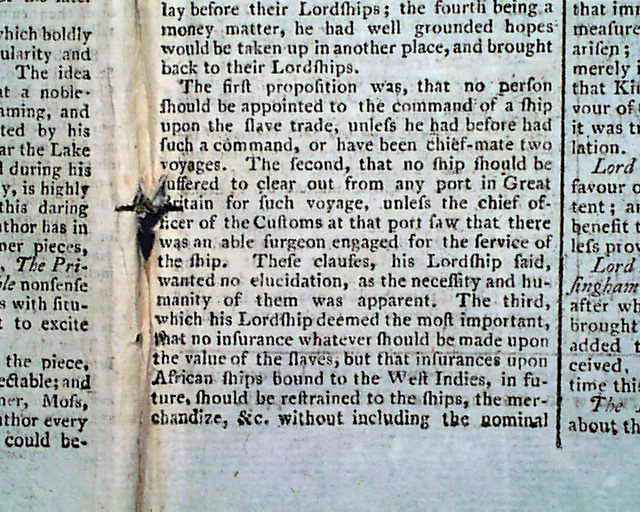
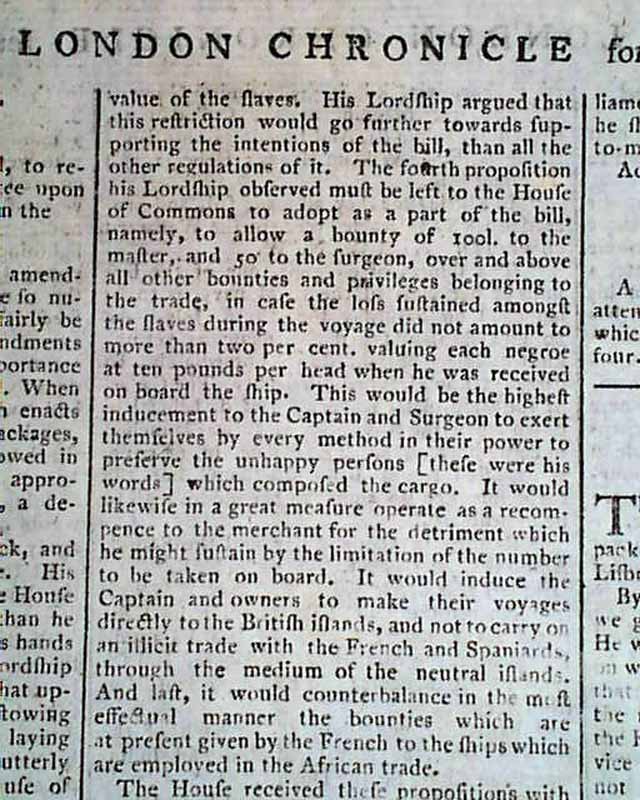
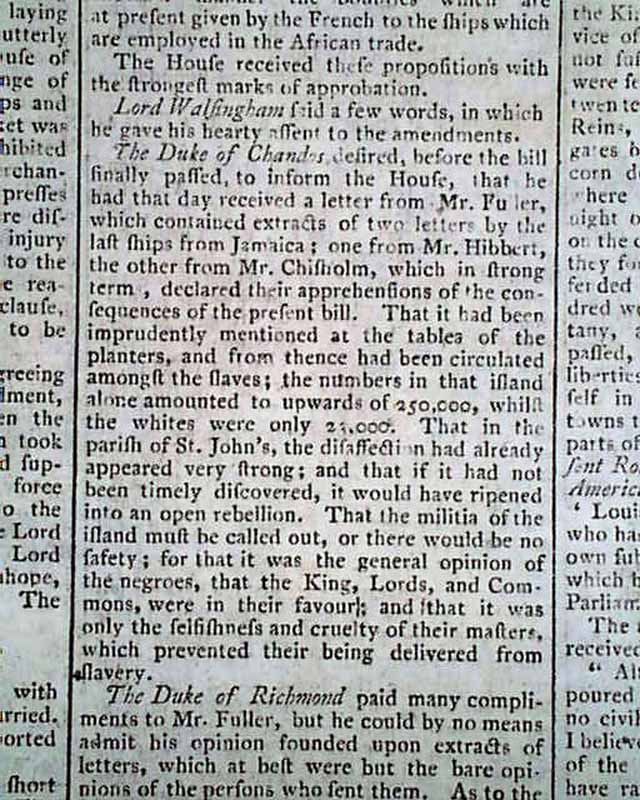
THE LONDON CHRONICLE, July 3, 1788 The third column on page 14 contains the report of George Barrington (of eventual Botany Bay fame) being arrested on attempted pickpocketing. There is also an article pertaining to laws in regard to slave trade.
Page 15 has several columns regarding the slave trade... including discussion on laws designed to help improve their conditions during transport.
Complete in 8 pages and is in nice condition.
Background (source - Wikipedia): George Barrington (14 May 1755 – 27 December 1804), an Irish-born pickpocket, popular London socialite, Australian pioneer (following his transportation to Botany Bay), and author. His escapades, arrests, and trials, were widely chronicled in the London press of his day. For over a century following his death, and still perhaps today, he was most celebrated for the line "We left our country for our country's good." The attribution of the line to Barrington is considered apocryphal since the 1911 discovery by Sydney book collector Alfred Lee of the 1802 book in which the line first appeared.
At Botany Bay - One account states that on the voyage out to Botany Bay a conspiracy was hatched by the convicts on board to seize the ship. Barrington disclosed the plot to the captain, and the latter, on reaching New South Wales, reported him favourably to the authorities, with the result that in 1792 Barrington obtained a warrant of emancipation (the first issued), becoming subsequently superintendent of convicts and later high constable of Parramatta.
Page 15 has several columns regarding the slave trade... including discussion on laws designed to help improve their conditions during transport.
Complete in 8 pages and is in nice condition.
Background (source - Wikipedia): George Barrington (14 May 1755 – 27 December 1804), an Irish-born pickpocket, popular London socialite, Australian pioneer (following his transportation to Botany Bay), and author. His escapades, arrests, and trials, were widely chronicled in the London press of his day. For over a century following his death, and still perhaps today, he was most celebrated for the line "We left our country for our country's good." The attribution of the line to Barrington is considered apocryphal since the 1911 discovery by Sydney book collector Alfred Lee of the 1802 book in which the line first appeared.
At Botany Bay - One account states that on the voyage out to Botany Bay a conspiracy was hatched by the convicts on board to seize the ship. Barrington disclosed the plot to the captain, and the latter, on reaching New South Wales, reported him favourably to the authorities, with the result that in 1792 Barrington obtained a warrant of emancipation (the first issued), becoming subsequently superintendent of convicts and later high constable of Parramatta.
Category: The 1600's and 1700's


