

Much on the hated quartering of troops in Boston...
Item # 590009Sorry, but this item is no longer available. Please be in touch at info@rarenewspapers.com if you would like to be placed on a want list or are interested in a potential alternate issue.
October 10, 1768
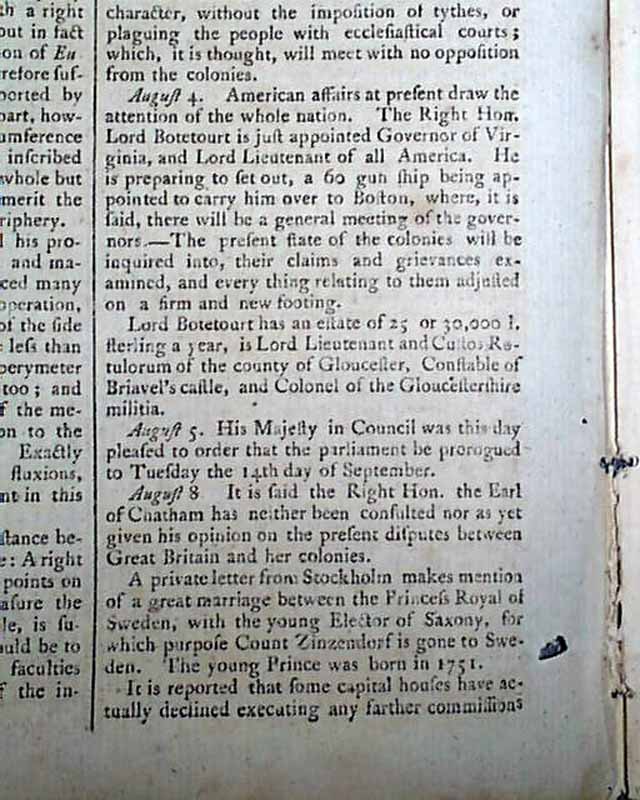
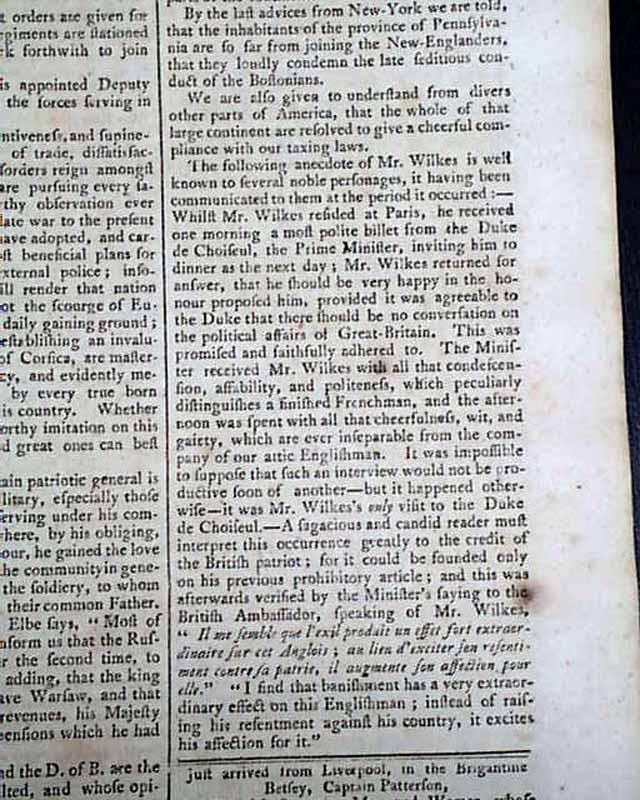
THE PENNSYLVANIA CHRONICLE & UNIVERSAL ADVERTISER, Philadelphia, Oct. 10, 1768 Page 2 has a report from London which includes: "American affairs at present draw the attention of the whole nation...Lord Botetourt is just appointed Governor of Virginia & Lord Lieutenant of all America...The present state of the colonies will be inquired into, their claims & grievances examined & every thing relating to them adjusted on a firm and new footing." Other items elsewhere include: "We are also given to understand from divers other parts of America that the whole of that large continent are resolved to give a cheerful compliance with our taxing laws."
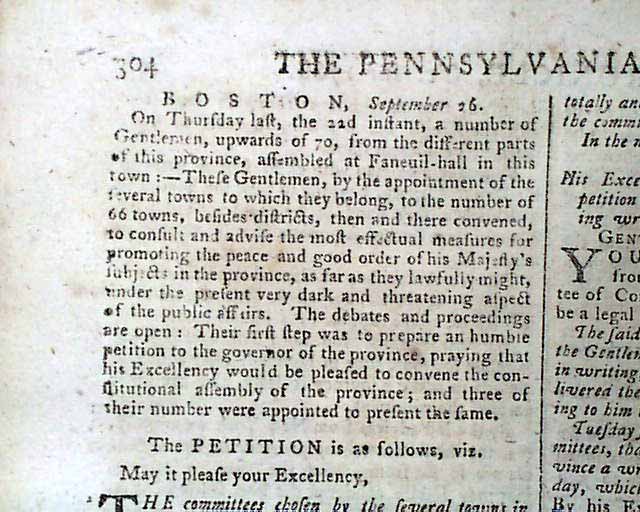
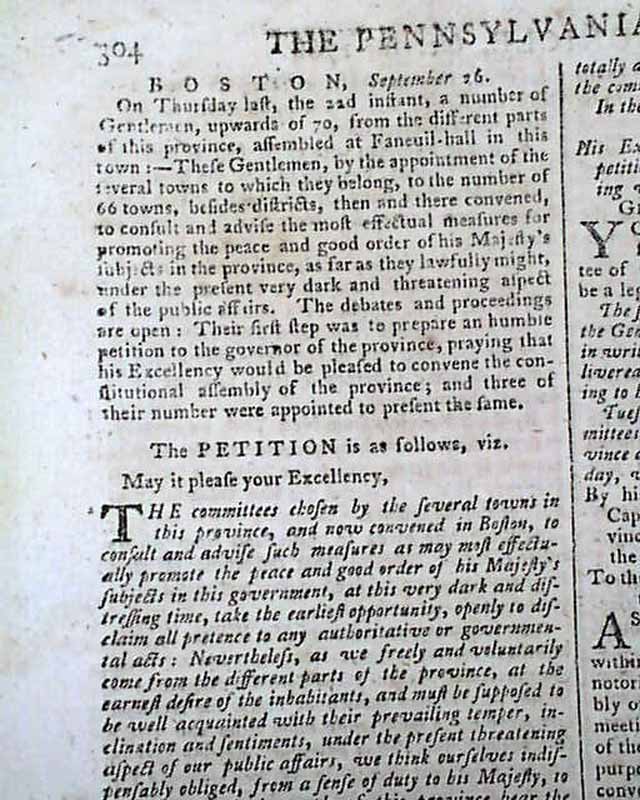
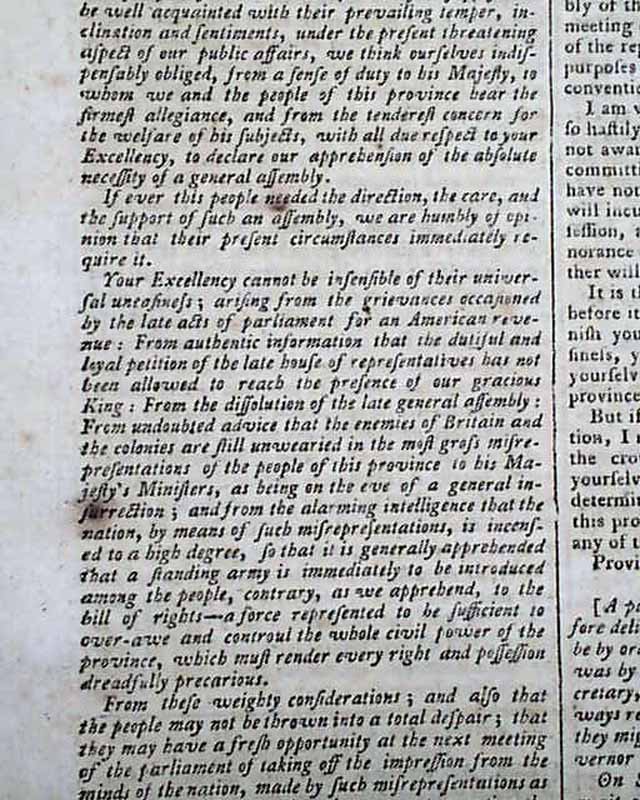
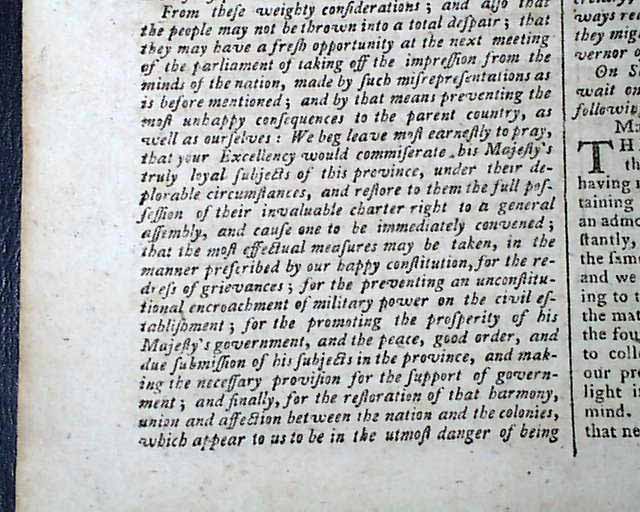
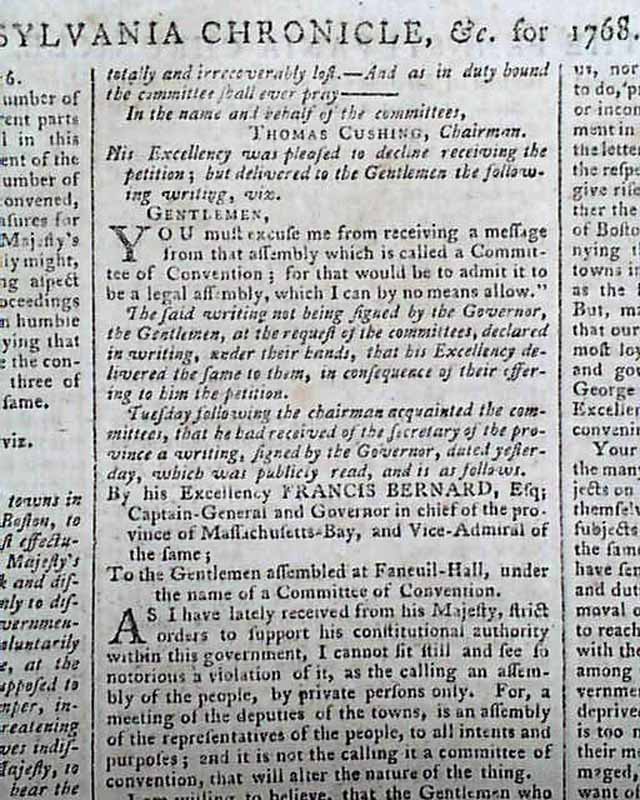
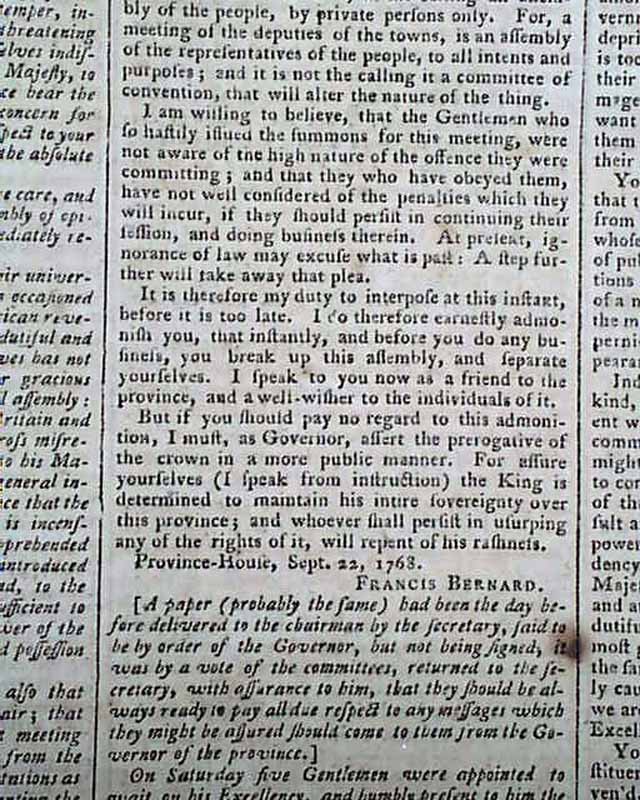
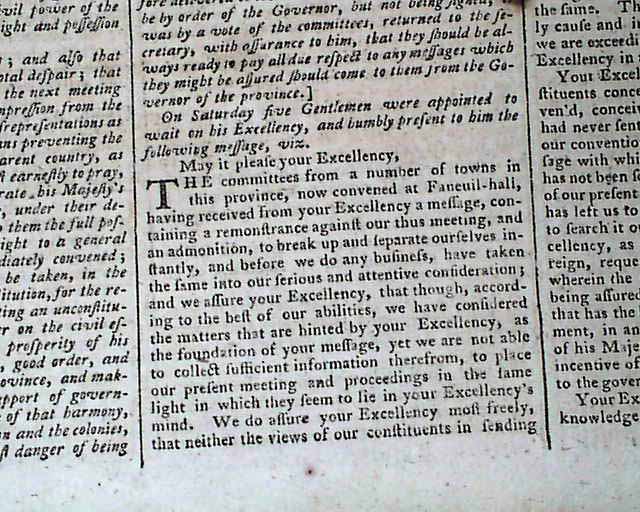
Over a full page is taken up with content concerning affairs at Boston, one paragraph beginning: "...Your Excellency cannot be insensible of their universal uneasiness arising from the grievances occasioned by the late acts of parliament for an American revenue..." and a letter from the governor warning the residents against illegal meetings: "...strict orders to support his constitutional authority...I cannot sit still & see so notorious a violation of it as the calling an assembly of the people..." with much more.
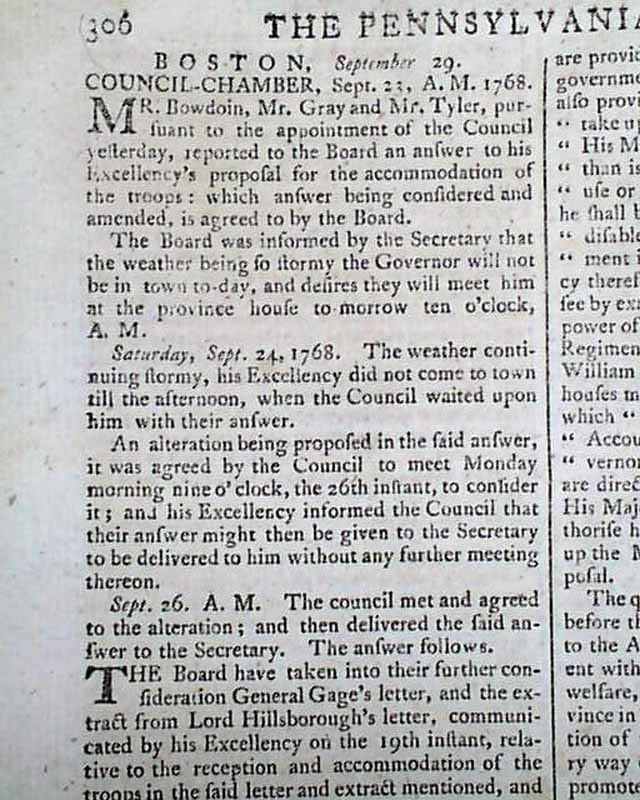
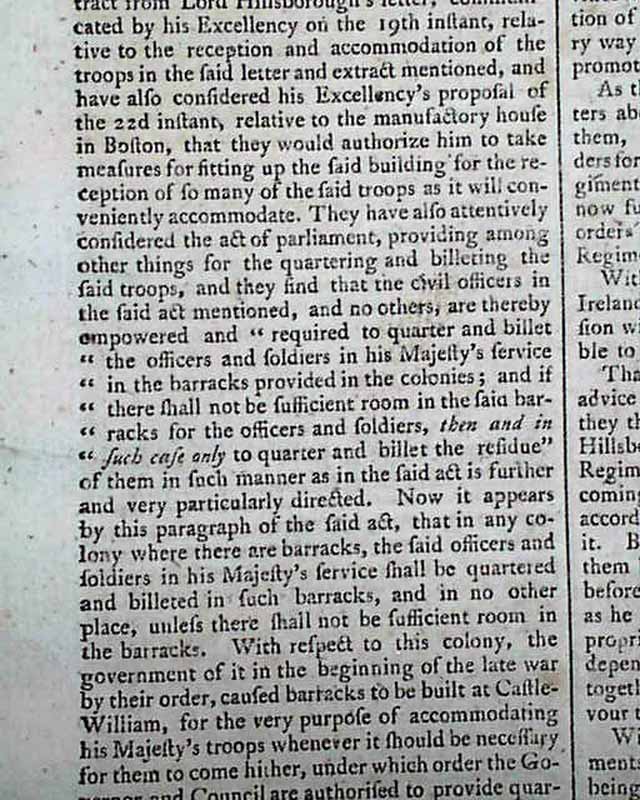
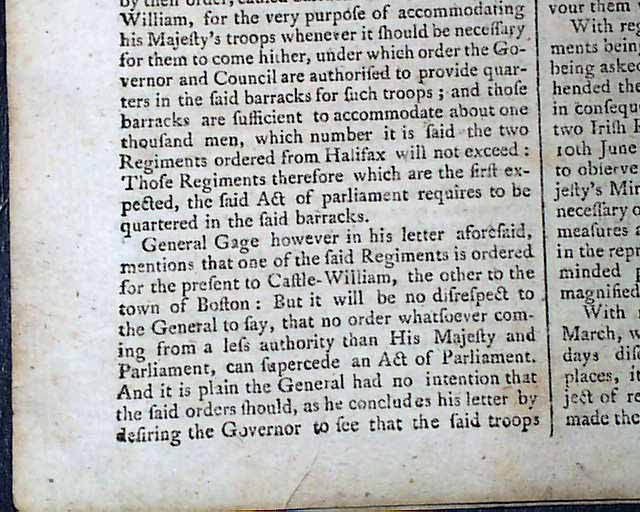
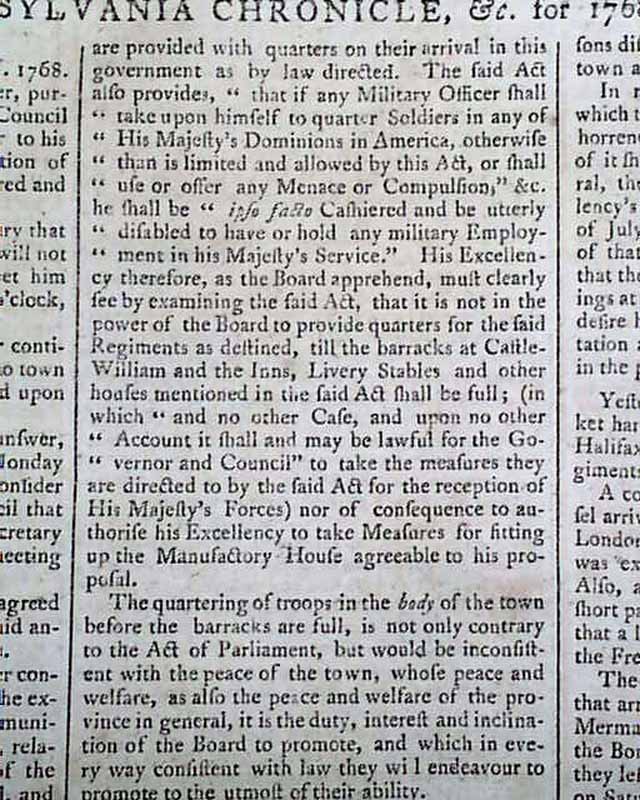
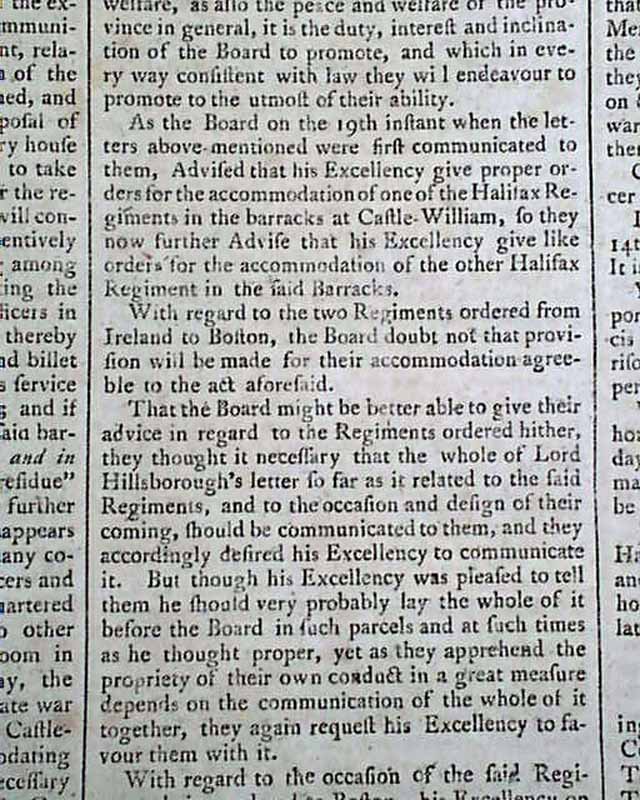
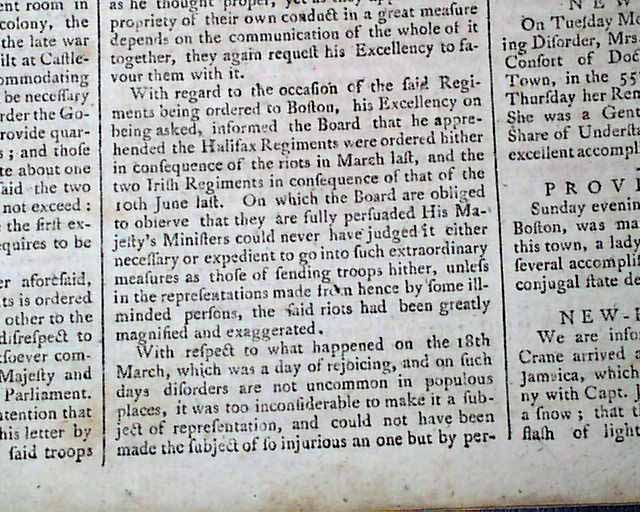
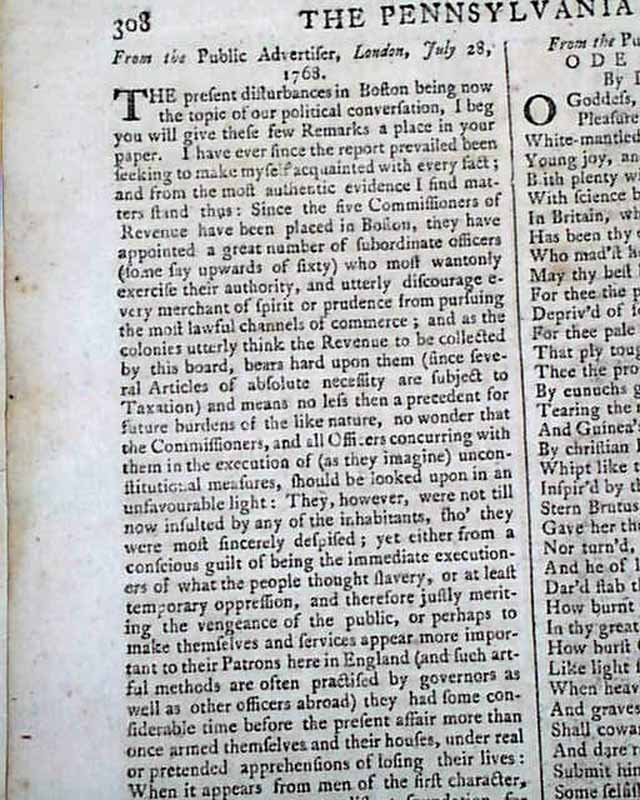
Another page has much on the controversy of quartering troops in Boston homes, noting in part: "...The quartering of troops in the body of the town before the barracks are full is not only contract to the Act of Parliament, but would be inconsistent with the peace of the town..." with much, much more (see). One-third of the back page begins: "The present disturbances in Boston being now the topic of our political conversation..." (see).
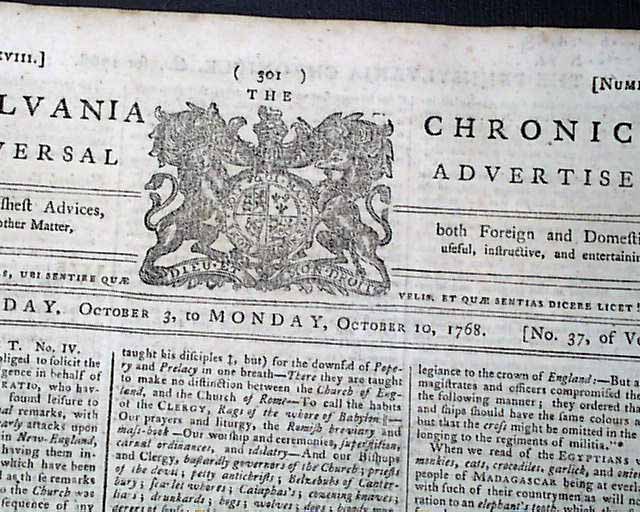
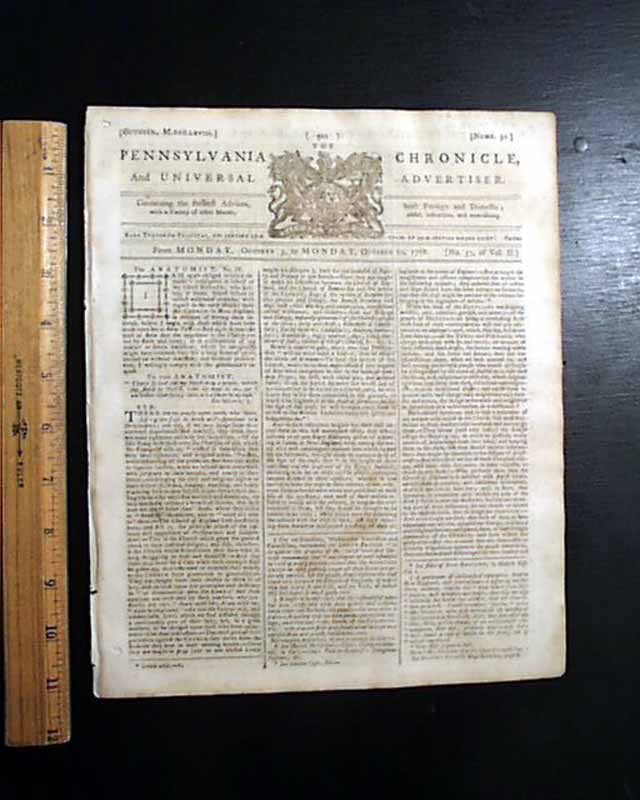
Eight pages, 9 1/2 by 11 1/2 inches, very nice condition with a handsome coat-of-arms engraving in the masthead.
This newspaper was a primary means in voicing the anti-British sentiment that was rapidly spreading throughout the colonies prior to the American Revolution. The paper gained much notoriety when Goddard printed an article voicing his support for the Boston Tea party. The paper's sympathies and general revolutionary message were a cause of great concern to the British. Soon the newspaper was heavily taxed for its delivery by the Crown Post (the colonial mail system in use at the time), and later the Crown Post simply refused to deliver the publication, driving the newspaper out of business in 1773. This prompted Goddard and Benjamin Franklin to establish an alternative mail system independent of the Crown Post authorities. This alternative system ultimately became the basis of a postal system that would later become the US Post Office. (Wikipedia)
Over a full page is taken up with content concerning affairs at Boston, one paragraph beginning: "...Your Excellency cannot be insensible of their universal uneasiness arising from the grievances occasioned by the late acts of parliament for an American revenue..." and a letter from the governor warning the residents against illegal meetings: "...strict orders to support his constitutional authority...I cannot sit still & see so notorious a violation of it as the calling an assembly of the people..." with much more.
Another page has much on the controversy of quartering troops in Boston homes, noting in part: "...The quartering of troops in the body of the town before the barracks are full is not only contract to the Act of Parliament, but would be inconsistent with the peace of the town..." with much, much more (see). One-third of the back page begins: "The present disturbances in Boston being now the topic of our political conversation..." (see).
Eight pages, 9 1/2 by 11 1/2 inches, very nice condition with a handsome coat-of-arms engraving in the masthead.
This newspaper was a primary means in voicing the anti-British sentiment that was rapidly spreading throughout the colonies prior to the American Revolution. The paper gained much notoriety when Goddard printed an article voicing his support for the Boston Tea party. The paper's sympathies and general revolutionary message were a cause of great concern to the British. Soon the newspaper was heavily taxed for its delivery by the Crown Post (the colonial mail system in use at the time), and later the Crown Post simply refused to deliver the publication, driving the newspaper out of business in 1773. This prompted Goddard and Benjamin Franklin to establish an alternative mail system independent of the Crown Post authorities. This alternative system ultimately became the basis of a postal system that would later become the US Post Office. (Wikipedia)
Category: The 1600's and 1700's


