

Battle of Guilford Court House...
Item # 553146Sorry, but this item is no longer available. Please be in touch at info@rarenewspapers.com if you would like to be placed on a want list or are interested in a potential alternate issue.
June 07, 1781
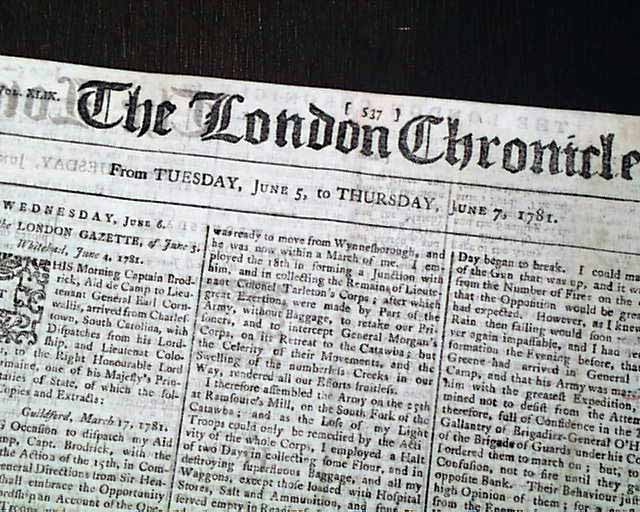
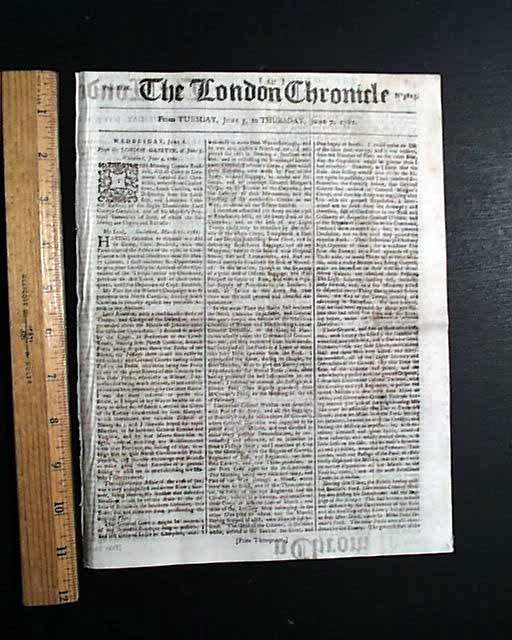
THE LONDON CHRONICLE, England, June 7, 1781
* Battle of Guilford Court House
* Revolutionary war original from the enemy
* Lord Cornwallis
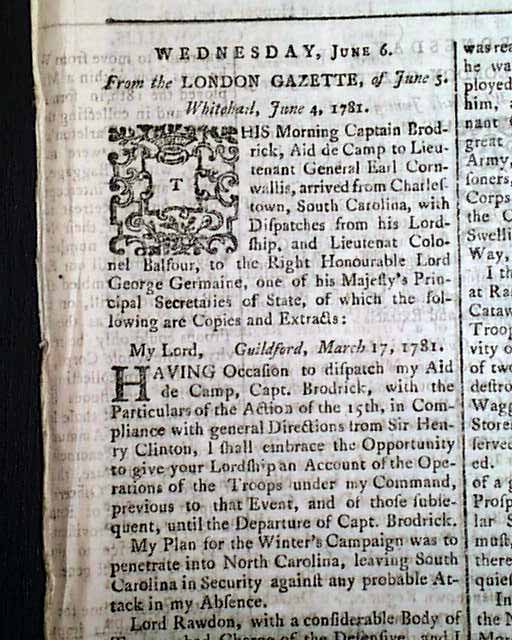
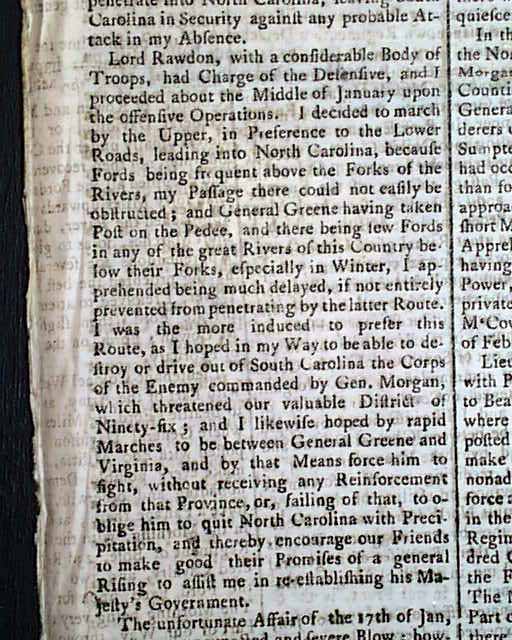
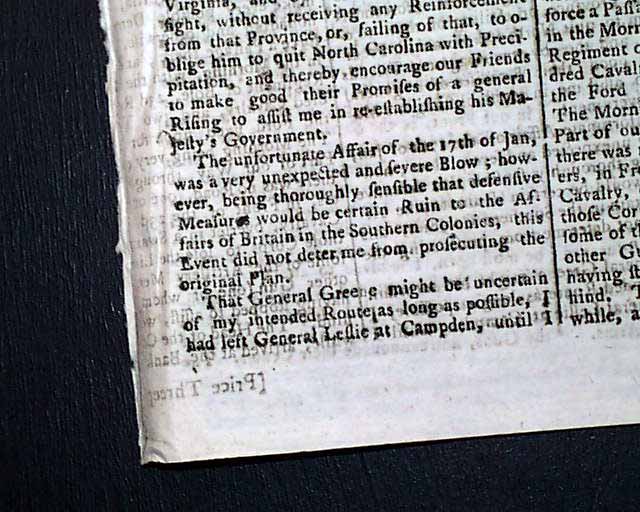
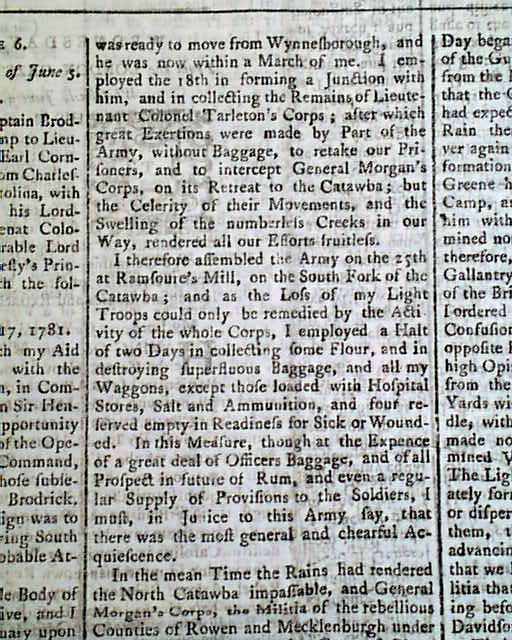
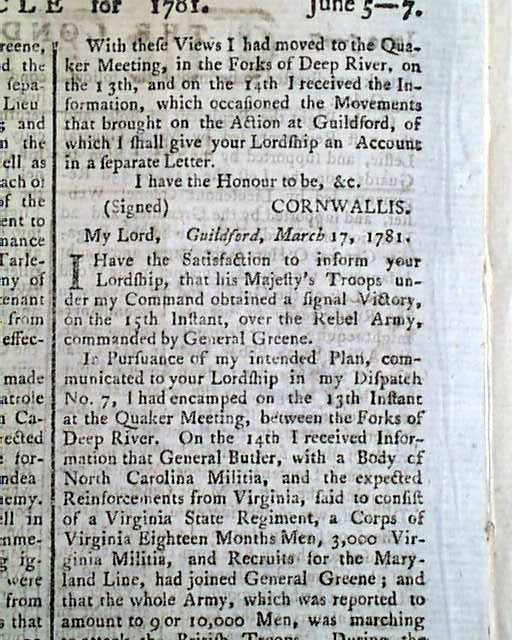
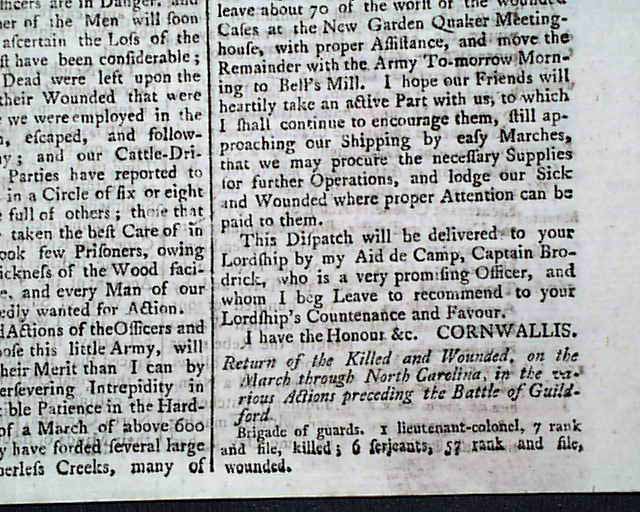
A terrific issue on the Battle of Guilford Court House, as the entire front page & most of pg. 2 are taken up with a letter signed in type: Cornwallis, dated at Guilford, March 17, 1781, in which he reports on his involvement in the South during the previous few months leading up to the actual battle and ending with:
* ...with these views I had moved to the Quaker Meeting in the forks of Deep River on the 13th, and on the 14th I received the information which occasioned the movements that bought on the action at Guildford, of which I shall give your Lordship an account in a separate letter
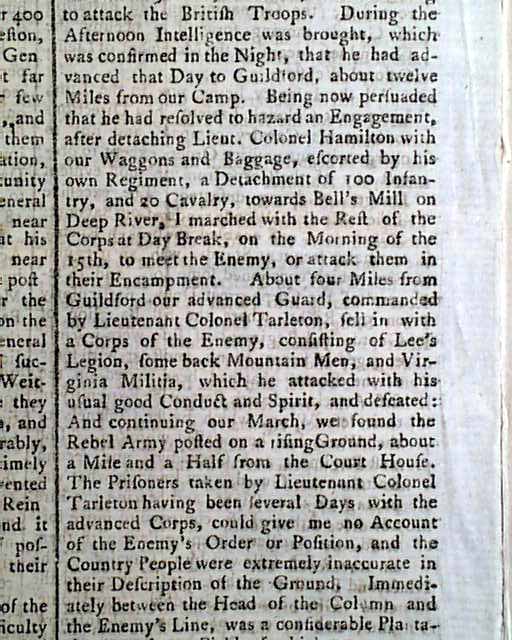
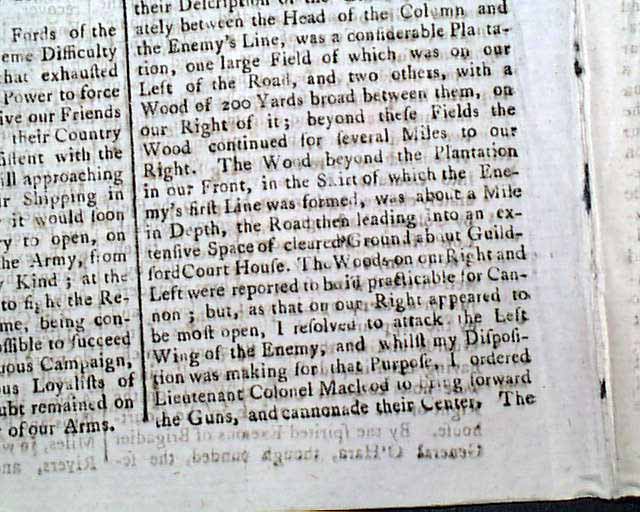
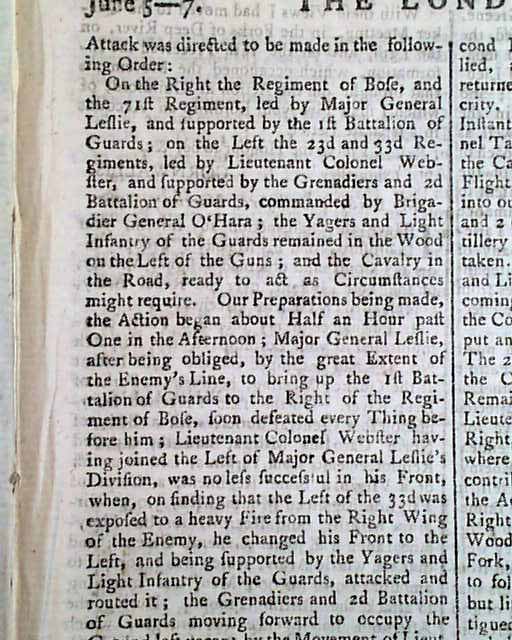
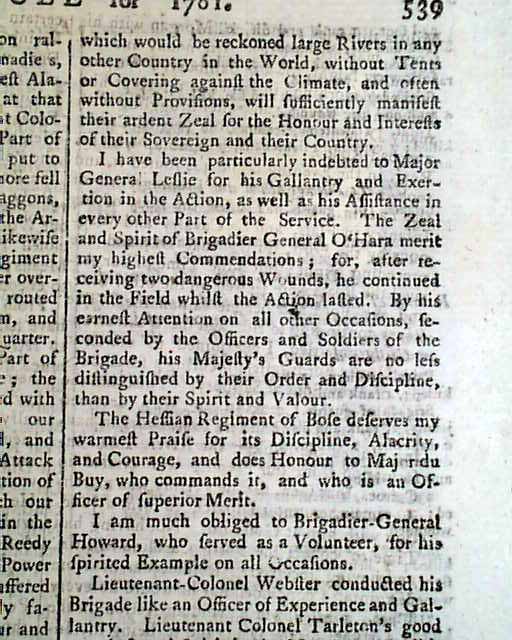
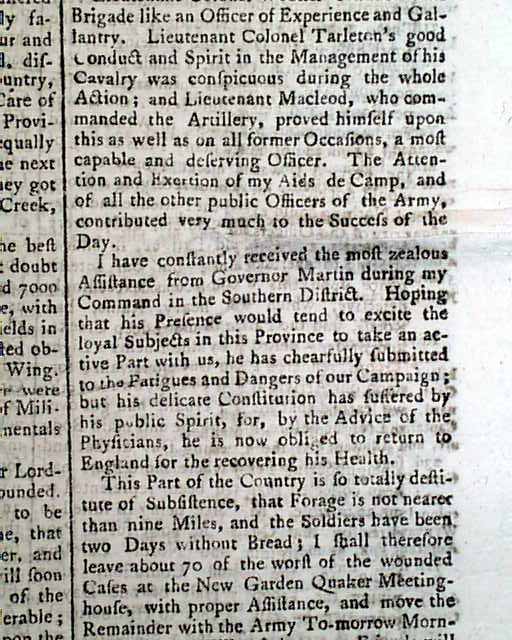
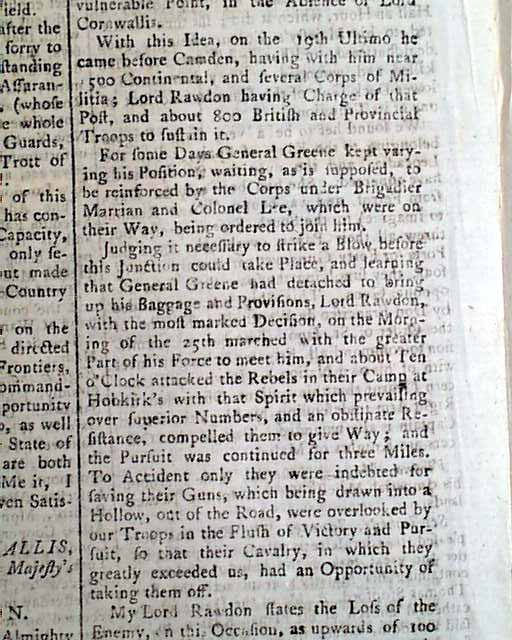
Immediately following this letter is the referenced letter, also dated Guildford, March 17, 1781 and taking over a full page to give considerable detail to the report on the Battle of Guilford Court House, signed by him in type: Cornwallis.
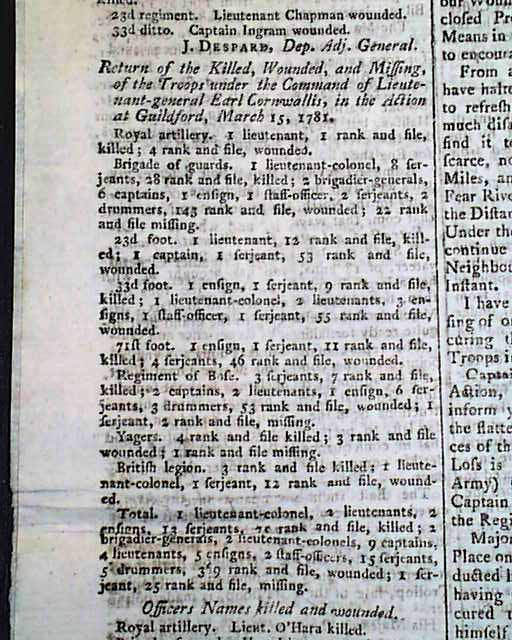
Following this is over a full column list of the: "Return of the Killed & Wounded on the March thru North Carolina in the various actions preceding the Battle of Guildford" and this is followed by the "Return of the Killed, Wounded & Missing...in the Action at Guildford, March 15, 1781".
Although this battle was technically a "victory" for Cornwallis over the forces of Generals Greene & Morgan, Cornwallis suffered such severe losses that he abandoned the campaign to establish British control over the Carolinas, an extremely significant development in the Revolutionary War.
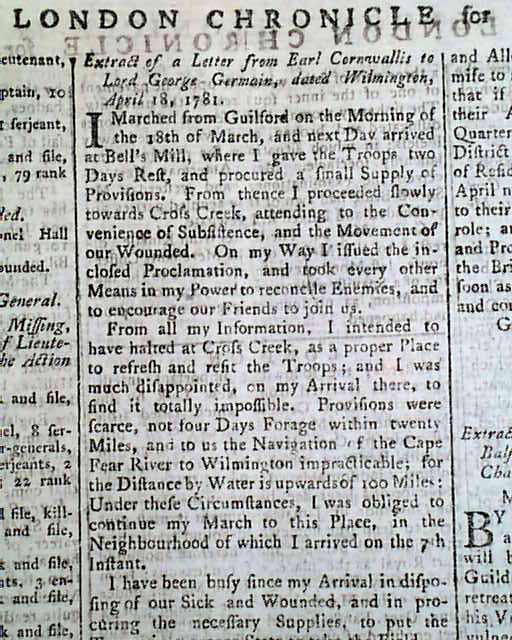
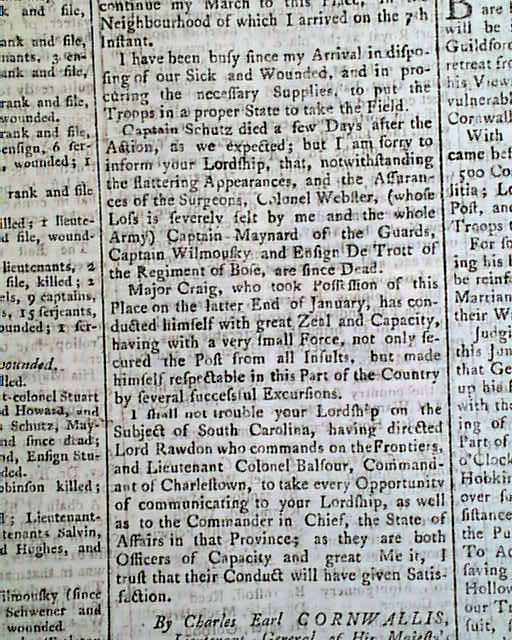
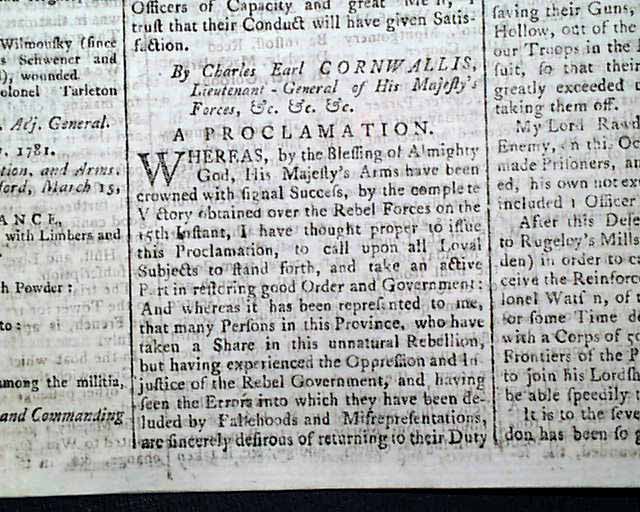
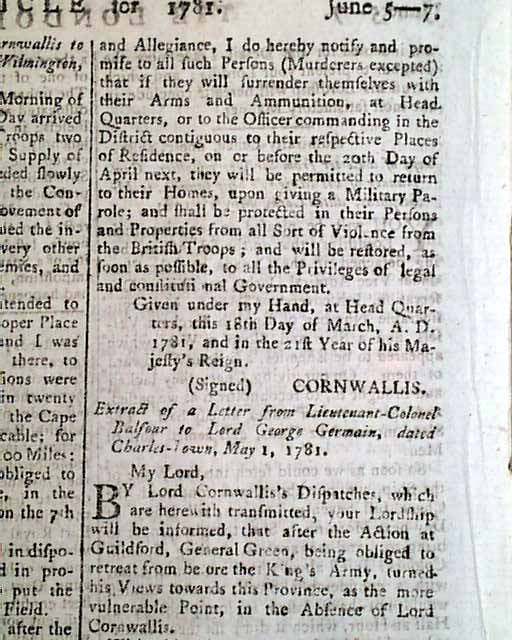
All of this is followed by a letter signed by Cornwallis dated April 18 on his actions after leaving Guilford, and then by "A Proclamation" signed by Cornwallis on the "victory" at Guilford. And there is yet another letter from Lt. Col. Balfour to George Germain dated Charleston, May 1, 1781, concerning Guilford Court House.
Complete in 8 pgs., 8 1/2 by 11 inches, and in great condition. Perhaps the best & most detailed report on Guilford Court House we have seen.
wikipedia notes: The Battle of Guilford Court House was a battle fought on March 15, 1781 inside the present-day city of Greensboro, North Carolina, during the American Revolutionary War. 1,900 British troops, under General Lord Cornwallis, fought an American force, under Rhode Island native General Nathanael Greene, numbering 4,400.
Despite the relatively small numbers of troops involved, the battle is considered decisive. Before the battle, the British appeared to have successfully reconquered Georgia and South Carolina with the aid of strong Loyalist factions, and thought that North Carolina might be within their grasp. In the wake of the battle, Greene moved into South Carolina, while Cornwallis chose to invade Virginia. These decisions allowed Greene to unravel British control of the South, while leading Cornwallis to Yorktown and surrender.
The battle is commemorated at Guilford Courthouse National Military Park.
* Battle of Guilford Court House
* Revolutionary war original from the enemy
* Lord Cornwallis
A terrific issue on the Battle of Guilford Court House, as the entire front page & most of pg. 2 are taken up with a letter signed in type: Cornwallis, dated at Guilford, March 17, 1781, in which he reports on his involvement in the South during the previous few months leading up to the actual battle and ending with:
* ...with these views I had moved to the Quaker Meeting in the forks of Deep River on the 13th, and on the 14th I received the information which occasioned the movements that bought on the action at Guildford, of which I shall give your Lordship an account in a separate letter
Immediately following this letter is the referenced letter, also dated Guildford, March 17, 1781 and taking over a full page to give considerable detail to the report on the Battle of Guilford Court House, signed by him in type: Cornwallis.
Following this is over a full column list of the: "Return of the Killed & Wounded on the March thru North Carolina in the various actions preceding the Battle of Guildford" and this is followed by the "Return of the Killed, Wounded & Missing...in the Action at Guildford, March 15, 1781".
Although this battle was technically a "victory" for Cornwallis over the forces of Generals Greene & Morgan, Cornwallis suffered such severe losses that he abandoned the campaign to establish British control over the Carolinas, an extremely significant development in the Revolutionary War.
All of this is followed by a letter signed by Cornwallis dated April 18 on his actions after leaving Guilford, and then by "A Proclamation" signed by Cornwallis on the "victory" at Guilford. And there is yet another letter from Lt. Col. Balfour to George Germain dated Charleston, May 1, 1781, concerning Guilford Court House.
Complete in 8 pgs., 8 1/2 by 11 inches, and in great condition. Perhaps the best & most detailed report on Guilford Court House we have seen.
wikipedia notes: The Battle of Guilford Court House was a battle fought on March 15, 1781 inside the present-day city of Greensboro, North Carolina, during the American Revolutionary War. 1,900 British troops, under General Lord Cornwallis, fought an American force, under Rhode Island native General Nathanael Greene, numbering 4,400.
Despite the relatively small numbers of troops involved, the battle is considered decisive. Before the battle, the British appeared to have successfully reconquered Georgia and South Carolina with the aid of strong Loyalist factions, and thought that North Carolina might be within their grasp. In the wake of the battle, Greene moved into South Carolina, while Cornwallis chose to invade Virginia. These decisions allowed Greene to unravel British control of the South, while leading Cornwallis to Yorktown and surrender.
The battle is commemorated at Guilford Courthouse National Military Park.
Category: Revolutionary War


